
I knew my sleep routine was in bad shape when I found myself wide awake at 2:43 a.m., staring at the ceiling as it owed me an explanation.
It was a Sunday night, which somehow made it worse. I had an early Monday meeting, laundry still sitting in the dryer, a grocery list I had forgotten to finish, and about twelve random worries bouncing around in my head like open browser tabs.
The frustrating part? I was exhausted.
My body wanted sleep. My brain apparently wanted to review every awkward conversation, unpaid bill, work deadline, and “what if” scenario from the past six months.
I tried the usual things.
I turned on a sleep podcast. Then I got annoyed by the host’s voice.
I tried a meditation app. Then my phone lit up with a notification, and suddenly I was checking emails like a person with absolutely no self-control.
I tried melatonin a few times before, but I hated the foggy, heavy feeling I sometimes had the next morning. I did not want to feel like I had been tranquilized just to get through a normal workday.
That was the night I realized my real problem was not just “falling asleep.” My problem was that I did not know how to turn my nervous system off at night.
So when I first heard about Dodow, I was skeptical.
A small circular device that sits on my nightstand and shines a pulsing light on the ceiling? That was supposed to help some people start drifting off in as little as 8 minutes?
Honestly, it sounded almost too simple.
But that simplicity is exactly what made me curious. Dodow did not require an app, subscription, prescription, speaker, Bluetooth connection, or another glowing phone screen next to my bed. It uses a soft projected light to guide breathing and help the body relax naturally.
So I decided to test it for myself.
During my 30-day Dodow test, I wanted to answer one simple question:
Can a tiny drug-free sleep aid device actually help calm a racing mind and make falling asleep feel easier?
In this Dodow review, I’ll walk you through my personal experience, how it works, what I liked, what I did not love, who I think it is best for, and whether I believe it is worth buying.
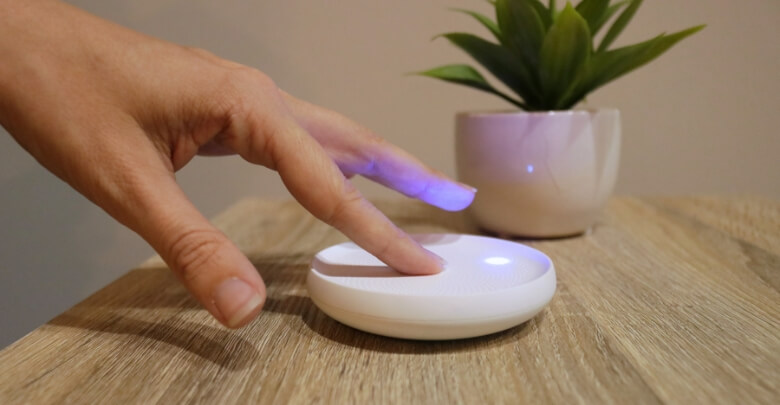
Dodow is a small, circular sleep aid device that sits on your nightstand and assists you in falling asleep naturally. The device mainly functions using a soft, little halo light that beams to the ceiling of your room.
- Super portable and wireless device
- Safe for all ages people
- Comes with a 100-night sleep trial
- Simple touchpad for easy control and operation
- The device has no low battery indication
- For some people, the light is too bright
- Not good for the people who have breathing issues
What Is Dodow?
Dodow is a small, drug-free sleep aid device that guides your breathing with a soft pulsing light projected onto the ceiling. By breathing in and out with the light’s rhythm, Dodow may help shift your focus away from racing thoughts and support physical and mental relaxation before sleep.
At its core, Dodow is not trying to be complicated.
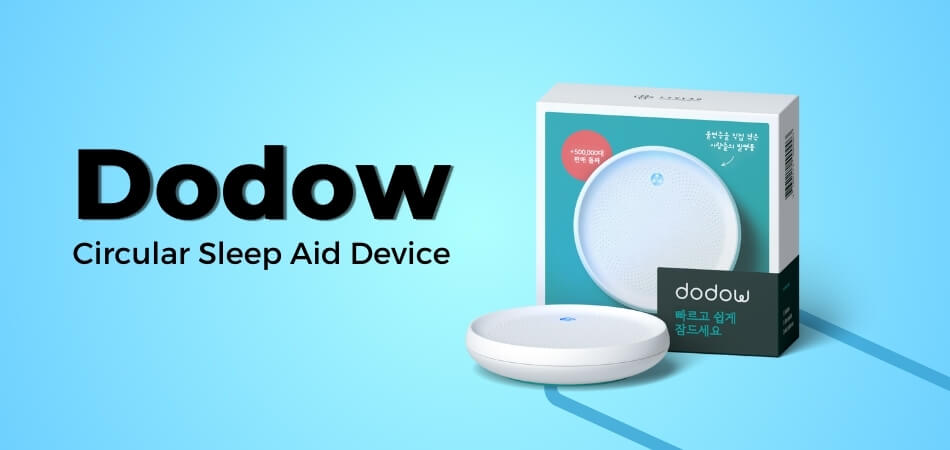
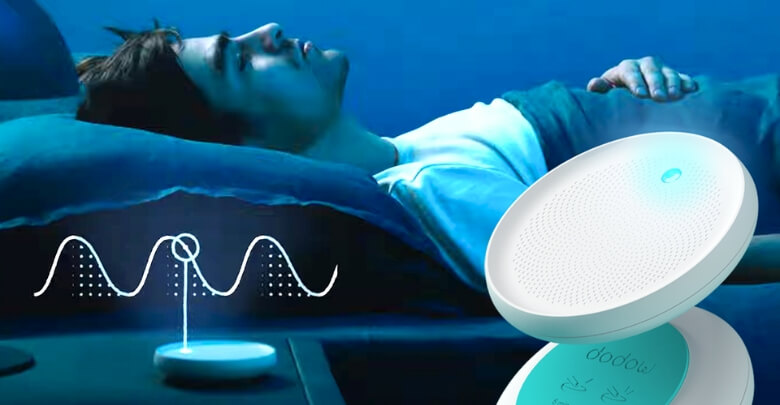
It is a small circular sleep aid device that sits on your nightstand. When you tap it, it projects a gentle blue halo onto your ceiling. As the light expands, you inhale. As the light contracts, you exhale.
That is it.
- No noise.
- No app.
- No medication.
- No scrolling.
- No guided voice whispering at you through your phone.
And honestly, that was one of the first things I liked about it.
I have tried enough “sleep solutions” to know that many of them accidentally create more stimulation. A sleep app still puts my phone within arm’s reach. A podcast keeps my brain listening. White noise helps sometimes, but it does not do much when the real noise is inside my head.
Dodow felt different because it gave me one simple thing to focus on: my breathing.
The brand positions Dodow as a natural sleep aid designed to support relaxation, easier sleep routines, and both physical and mental calm. It is also described as suitable from age 6, which may make it interesting for families looking for a gentle, non-invasive bedtime tool.
That mattered to me because I did not want another gimmick.
I wanted something that made sense.
And the basic idea behind Dodow does make sense: when I breathe slower, especially with longer exhales, my body gets the message that I am not in danger. I am not running from a bear. I am not late for a meeting. I am not solving my entire life at midnight.
I am just breathing.
That simple shift became the foundation of my entire experience with Dodow.
Why I Tried Dodow in the First Place
My biggest sleep issue was never loud neighbors, a bad mattress, or too much coffee.
It was my brain.
I would get into bed physically tired but mentally wired. My mind had this annoying habit of becoming most productive at the worst possible time. The second my head hit the pillow, I would suddenly remember every task I forgot, every email I needed to send, and every decision I had been avoiding.
The next morning, I would wake up feeling like I had technically slept, but not really rested.
That kind of poor sleep bleeds into everything.
I was more impatient during the day. I needed more coffee. My focus was worse. I felt less motivated to exercise. Even small problems felt bigger when I was running on broken sleep.
I did not want to keep relying on random fixes.
Melatonin sometimes worked, but I did not want to take it every night.
Sleep podcasts were hit or miss.
Meditation apps helped occasionally, but they still required my phone.
And leaving my phone near the bed was basically an invitation to doom-scroll.
That is why Dodow caught my attention.
It was not promising to “knock me out” like a pill. It was not pretending to be a medical cure. It simply claimed to help guide my breathing so my body could relax naturally.
That sounded like the kind of help I actually needed.
- Not forced sleep.
- Not sedation.
- Not another screen.
- Just a calmer way to enter sleep.
During my first few nights, I still had doubts. I remember lying there thinking, “There is no way this little blue light is going to fix years of bedtime overthinking.”
And to be clear, it did not magically fix everything overnight.
But what I found surprised me.
Dodow did not force me to sleep. It helped me stop fighting sleep.
That difference became the reason I kept using it.
How Does Dodow Work?
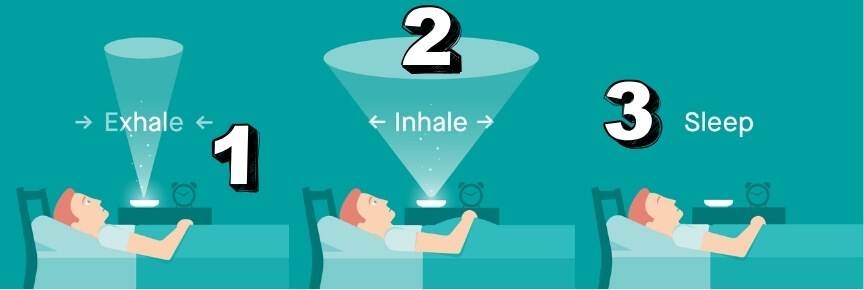
Dodow works by projecting a soft pulsing light onto your ceiling and guiding you through slow, steady breathing. You inhale as the light expands and exhale as it contracts. This rhythm may help calm mental chatter, slow the body down, and prepare you for sleep.
Using Dodow is almost embarrassingly simple.
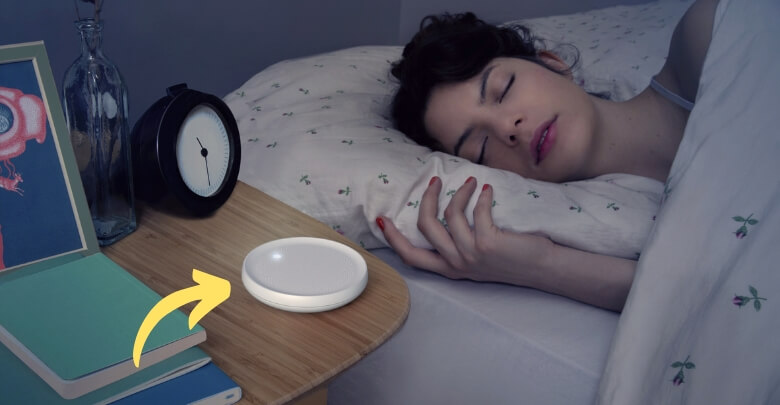
You place it on your nightstand, lie down, tap the surface, and watch the light on the ceiling.
That is the whole setup.
There are no menus to scroll through. No account to create. No app to download. No volume settings. No playlist. No sleep score staring back at you in the morning like a judgmental report card.
Dodow has two main modes:
- 8-minute mode: best for nights when I only need a short reset
- 20-minute mode: better for stressful nights when my mind needed more time to slow down
The device has a touch-sensitive surface, so I did not have to fumble around for buttons in the dark. One tap starts the shorter session. Another tap activates the longer one.
Once the session begins, Dodow projects a soft blue halo onto the ceiling.
When the light expands, I breathe in.
When the light contracts, I breathe out.
The rhythm gradually slows down, encouraging slower breathing and longer exhales. That longer exhale was important for me because it helped create that “settling” feeling in my chest and shoulders.
At first, I overthought it.
- Was I breathing too fast?
- Was I supposed to inhale through my nose?
- Was I doing it right?
- Was the light too high on the ceiling?
- Was I already ruining the test on night one?
That is exactly how my brain works at bedtime.
But after a few nights, I stopped trying to perfect it. I simply followed the light as best as I could.
That was when Dodow started making more sense.
The goal is not to perform a perfect breathing exercise. The goal is to give your mind something calm, repetitive, and boring enough to follow until sleep starts to feel natural again.
And I liked that Dodow shuts off automatically.
That sounds like a small detail, but it mattered. With sleep apps, I often had to unlock my phone, stop the audio, adjust the volume, or deal with notifications. With Dodow, once I started drifting, I did not have to do anything.
The device handled the rest.
My 30-Day Dodow Test: What Actually Happened
During my 30-day Dodow test, I found that it did not make me fall asleep instantly every night, but it did help me relax faster and stop obsessing over whether I was asleep yet. The biggest improvement was mental: bedtime felt calmer, less frustrating, and less dependent on my phone.
I went into this test with realistic expectations.
I did not expect Dodow to cure every bad night. I did not expect one tap to erase stress, deadlines, family responsibilities, or my habit of mentally rewriting text messages from 2017.
What I wanted to know was whether Dodow could make falling asleep feel easier.
So I used it consistently for 30 days.
Some nights, I used the 8-minute mode.
On more stressful nights, I used the 20-minute mode.
And when I woke up in the middle of the night, I used Dodow instead of reaching for my phone.
That last part became one of the biggest wins for me.
Week 1: I Was Skeptical, But I Felt Calmer
The first week was not dramatic.
I did not tap Dodow and suddenly woke up eight hours later feeling like a wellness influencer in linen pajamas.
The first few nights were more subtle than that.
I noticed that my breathing slowed down. I noticed that my shoulders dropped a little. I noticed that I was checking the clock less often because I was watching the light instead.
That may not sound like a big deal, but if you have ever struggled with sleep anxiety, you know how destructive clock-checking can be.
You look at the time.
Then you calculate how many hours you have left.
Then you panic because you are still awake.
Then the panic keeps you awake even longer.
Dodow helped interrupt that loop.
Instead of thinking, “Why am I not asleep yet?” I was thinking, “Breathe in. Breathe out.”
Simple. Repetitive. Quiet.
By the end of the first week, I was not fully convinced, but I was interested enough to keep going.
Week 2: Falling Asleep, Started Feeling Less Forced
During the second week, Dodow became easier to use.
I stopped analyzing it. I stopped wondering whether it was “working.” I stopped treating it like a product test and started treating it like part of my bedtime routine.
That shift helped.
On work nights, especially Sundays, I used the 20-minute mode. That gave me enough time to settle down without feeling rushed.
On regular nights, the 8-minute mode was usually enough to take the edge off.
The biggest difference was that I was no longer trying to force sleep. I was giving my body a rhythm to follow and letting sleep happen in the background.
I also noticed I was using my phone less at night.
That alone made Dodow feel worthwhile.
Because let’s be honest: most of us say we are checking one thing before bed, and then suddenly we are 22 minutes deep into weather alerts, celebrity drama, and a video of someone organizing their pantry.
Dodow gave me something else to do that did not involve a screen.
Week 3: Dodow Became Part of My Bedtime Routine
By the third week, Dodow had earned its place on my nightstand.
I liked seeing it there because it reminded me that bedtime did not have to become a mental wrestling match.
I would turn off the lights, get comfortable, tap Dodow, and follow the blue halo on the ceiling.
At this point, my body seemed to understand the pattern.
- The light meant to slow down.
- The breathing meant relaxation.
- The silence meant stop consuming information.
This was also when I appreciated how low-maintenance Dodow was.
It is battery-powered, portable, and wireless. It uses 3 AAA batteries, so I did not have another cord cluttering up my nightstand. That made it easy to move around or pack for travel.
I also noticed Dodow could be useful beyond my own bedroom. Some offers include a discount on a Dodow travel case, which makes sense if you want to protect the device in a bag or suitcase.
For anyone who struggles to sleep in hotels, guest rooms, or during travel, that portability is a real benefit.
Week 4: The Biggest Change Was Mental
By week four, I understood Dodow better.
- It was not a knockout device.
- It was not a sleeping pill.
- It was not a magic switch.
Dodow worked best as a guided breathing device that helped my brain stop spiraling long enough for sleep to arrive naturally.
The biggest change was mental.
Before Dodow, I often went to bed with a sense of pressure. I had to fall asleep quickly. I had to get enough hours. I had to wake up refreshed. I had to perform well the next day.
That pressure made sleep harder.
Dodow gave me a different job.
Just breathe with the light.
That was manageable.
I still had a couple of restless nights during the 30-day test. I do not want to pretend otherwise. Stress still exists. Bad sleep still happens. Some nights are just off.
But overall, Dodow made my bedtime routine feel calmer and more controlled.
And for me, that was the real value.
Dodow Features That Stood Out to Me
Dodow stands out because it keeps sleep support simple: guided breathing, two session lengths, automatic shutoff, silent operation, natural relaxation support, and a portable battery-powered design. In my hands-on experience, these features made it easier to build a calming bedtime routine without apps, pills, or noise.
After testing Dodow for 30 days, I realized its strongest feature is not one flashy piece of technology.
It is the fact that everything feels intentionally simple.
A lot of sleep gadgets try to do too much. They track your sleep, score your sleep, analyze your sleep, sync with your phone, vibrate, play sounds, collect data, and send reminders.
That can be useful for some people, but for me, it sometimes makes sleep feel like another performance metric.
Dodow does the opposite.
It gives you one quiet job: breathe with the light.
Guided Breathing Light
The pulsing light is the heart of Dodow.
It expands and contracts slowly on the ceiling, giving your eyes and mind something calm to follow. I found this especially helpful because it replaced my usual bedtime thought spiral with a simple visual rhythm.
Instead of thinking about work, bills, messages, or tomorrow’s schedule, I was watching the light and matching my breathing to it.
That made bedtime feel less chaotic.
8-Minute and 20-Minute Modes
I liked having two session options because not every night is the same.
The 8-minute mode was useful on normal nights when I just needed a quick wind-down.
The 20-minute mode was better when I felt wired, anxious, overstimulated, or stuck in that annoying “I’m exhausted but somehow wide awake” state.
Dodow is often marketed around the idea that 8 minutes may be enough for some users to start falling asleep. My experience was more realistic: some nights, 8 minutes helped me drift quickly; other nights, I needed the longer mode.
Having both modes made Dodow feel more flexible.
Automatic Shutoff
This feature mattered more than I expected.
Once the breathing session ends, Dodow shuts off by itself. I did not have to reach over, press a button, unlock a phone, or stop an audio track.
That matters when you are half-asleep.
One of my biggest issues with sleep apps is that they still involve my phone. Even if the app is helpful, my phone is a trap. A quick adjustment can turn into checking texts, emails, social media, or tomorrow’s weather.
Dodow avoids that problem completely.
No Sound, App, or Screen Required
This was one of my favorite things about Dodow.
It is completely silent.
That makes it a good fit for shared bedrooms, light sleepers, or anyone who gets distracted by sleep stories, guided meditations, music, or white noise.
Dodow gave me quiet structure without extra stimulation.
Battery-Powered and Portable
Dodow runs on 3 AAA batteries, which makes it wireless and easy to place anywhere on a nightstand.
I liked not having another charging cable next to my bed. My nightstand already has enough clutter: lamp, book, water glass, random receipt, and sometimes a phone I am trying very hard not to touch.
Because Dodow is small and battery-powered, it is also easy to travel with.
Some current promotions also highlight a travel case discount, such as a special offer on the case when buying Dodow. That is a nice add-on if you plan to use it during trips, hotel stays, or family visits.
Natural Sleep Support
Dodow is promoted as a natural sleep solution because it does not rely on medication, supplements, sound, or screen-based content.
That was one of the biggest selling points for me.
I did not want to feel dependent on sleep gummies or pills. I wanted something that helped train my body to relax.
Dodow does that by guiding breathing, not by putting something into your system.
Suitable From Age 6
One detail I found interesting is that Dodow is described as suitable from age 6.
That could make it useful for families with children who struggle to settle down at bedtime, especially kids who get overstimulated from school, screens, activities, or busy family routines.
Parents should supervise use, make sure the breathing rhythm feels comfortable, and speak with a pediatrician if their child has ongoing sleep, anxiety, or breathing issues.
What I Loved About Dodow
What I loved most about Dodow was how it helped quiet my racing thoughts without medication, noise, or another phone app. It made bedtime feel calmer, helped me breathe more slowly, supported physical and mental relaxation, and gave me a simple routine I could use at home or while traveling.
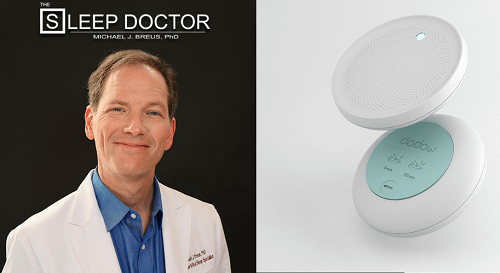
After 30 days, I would not describe Dodow as dramatic.
I would describe it as quietly effective.
It did not feel like a high-tech gadget trying to impress me. It felt like a simple tool that helped me do something I should have been doing already: slow down.
Here is what I genuinely liked.
It Helped Quiet My Racing Thoughts
This was the main benefit for me.
My biggest sleep problem was not that I did not know I needed rest. It was that my mind refused to cooperate.
Dodow helped by giving my brain a single, calming task.
- Follow the light.
- Breathe in.
- Breathe out.
- Repeat.
That rhythm made it harder for my thoughts to take over.
It Supported Physical and Mental Relaxation
One of Dodow’s strongest benefits is that it does not just distract the mind. It encourages the body to slow down too.
When my breathing slowed, my shoulders relaxed. My jaw felt less tight. My chest felt less tense.
That physical shift mattered because stress is not only mental. Sometimes your body stays in “go mode” long after the day is over.
Dodow helped me create a bridge between a busy day and a calmer night.
It Made Bedtime Feel Less Stressful
Before using Dodow, I had started to dread certain nights.
Especially Sunday nights.
There is something uniquely frustrating about knowing you need sleep and feeling your brain do the exact opposite.
Dodow made bedtime feel less like a test I had to pass.
Instead of lying there thinking, “I need to fall asleep right now,” I had a simple process to follow.
That lowered the pressure.
I Did Not Wake Up Feeling Groggy
One of the reasons I have always been cautious with sleep supplements is the next morning.
Even when they help me fall asleep, I do not like waking up feeling heavy, foggy, or slow.
With Dodow, I did not have that issue.
Because it is not a pill or supplement, there was no “hangover” feeling for me.
It Helped Me Keep My Phone Away From the Bed
This might be one of the most underrated benefits.
Dodow gave me something to use at bedtime that was not my phone.
That matters because my phone is one of the biggest enemies of my sleep routine. Even when I have good intentions, one notification can pull me back into the world.
Dodow helped me create a cleaner boundary.
It Was Useful for Middle-of-the-Night Wakeups
Waking up at 3 a.m. is one of the most annoying sleep problems because everything feels more dramatic at that hour.
A normal worry at 3 p.m. becomes a full-blown life crisis at 3 a.m.
Before Dodow, I usually made things worse by checking the time or grabbing my phone.
During my test, I started using Dodow instead.
The 8-minute mode was especially helpful here. It gave me a quick breathing reset without fully waking me up.
It Feels Travel-Friendly
Dodow is small enough to pack and simple enough to use in different rooms.
I liked the idea of having a portable sleep aid that did not depend on Wi-Fi, an outlet, or a phone.
The travel case promotion makes this benefit even stronger. If you plan to take Dodow on trips, a protective case is genuinely useful.
What I Did Not Love About Dodow
Dodow is useful, but it is not perfect. The biggest downsides are that it has no low-battery indicator, the blue light may feel slightly bright at first, and it can take a few nights to get used to the breathing rhythm. It is also not a medical treatment.
I want this Dodow review to be honest, not just another glowing product pitch.
While I liked Dodow overall, there were a few things I would change.
None of these were deal-breakers for me, but they are worth knowing before you buy.
There Is No Low-Battery Indicator
This was probably my biggest practical complaint.
Dodow runs on 3 AAA batteries, which I like because it keeps the device portable and wireless. But I do wish it had a simple low-battery indicator.
Even a small blinking light or warning signal would help.
The Light May Feel Bright at First
The pulsing blue light is soft, but if your bedroom is completely dark, you may notice it more during the first few nights.
That happened to me.
The first night, I remember thinking, “Is this going to keep me awake?”
But after adjusting the placement on my nightstand and giving myself a few nights to get used to it, the light felt less distracting and more soothing.
It Takes a Few Nights to Get Used To
Dodow is simple, but that does not mean your brain will instantly cooperate.
During the first few sessions, I caught myself trying too hard.
I was focused on whether I was breathing “correctly,” whether I should be falling asleep faster, and whether the device was doing enough.
After a few nights, the process became more natural.
It Is Not a Cure for Serious Sleep Problems
This is important.
Dodow is a wellness device, not a medical treatment.
I would not recommend treating it like a cure for severe insomnia, sleep apnea, panic attacks, chronic anxiety, or breathing-related health conditions.
If your sleep issues are serious, long-term, or affecting your daily life in a major way, it is smart to talk with a healthcare professional.
That said, for everyday stress, racing thoughts, occasional sleeplessness, and middle-of-the-night wakeups, I found it genuinely useful.
Who Should Use Dodow?
Dodow is best for people who struggle with racing thoughts, bedtime stress, occasional sleeplessness, or waking up in the middle of the night. It is especially useful for anyone who wants a natural, drug-free, screen-free, silent way to relax before sleep and build a calmer nighttime routine.
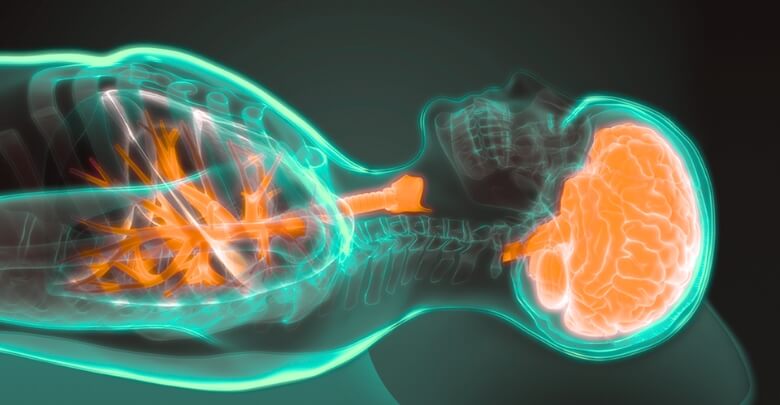
Dodow may be a good fit for:
- People with racing thoughts at bedtime
- People who wake up at 3 a.m. and cannot fall back asleep
- Busy parents who feel mentally overstimulated at night
- Stressed professionals who bring work into bed mentally
- People are trying to avoid sleeping pills or nightly supplements
- People who dislike sleep apps and phone-based meditation
- Light sleepers who hate sound-based sleep aids
- Travelers who struggle in hotels or unfamiliar rooms
- Families looking for a gentle sleep routine tool for children ages 6 and up
If your issue is that your body feels tired but your brain will not shut off, Dodow makes sense.
Who Should Not Use Dodow?
Dodow may not be the right choice for people who expect an instant cure, need total darkness, dislike visual sleep aids, or have serious, untreated sleep disorders. It is best for relaxation and breathing support, not for diagnosing or treating medical sleep conditions.
Dodow may not be ideal for:
- People expecting a magic sleep button
- People with severe, untreated insomnia
- People with sleep apnea or breathing-related conditions
- People who cannot tolerate any light at night
- People who prefer audio guidance
- People who dislike breathing exercises
Dodow is not meant to replace medical care. It is a natural relaxation tool, not a prescription sleep treatment.
Dodow vs. Melatonin, Sleep Apps, and White Noise Machines
Dodow differs from melatonin, sleep apps, and white noise machines because it uses guided breathing instead of supplements, screens, or sound. It is best for people whose main sleep issue is mental overstimulation, racing thoughts, or difficulty calming the body before bed.
Dodow vs. Melatonin
Melatonin affects the body chemically. Dodow helps guide behavior and relaxation.
For me, Dodow was appealing because it did not leave me feeling groggy the next morning.
Dodow vs. Sleep Apps
Sleep apps can be useful, but they require your phone.
Dodow helped me keep my phone away from the bed, which improved my sleep hygiene.
Dodow vs. White Noise Machines
White noise machines help mask sound.
Dodow helps with breathing and mental focus.
If your room is quiet but your brain is loud, Dodow may be more useful than a sound machine.
Dodow vs. Guided Meditation
Guided meditation uses voice or audio instructions.
Dodow is silent and visual.
That made it better for me on nights when I did not want to listen to anything.
Is Dodow Legit or a Scam?
Based on my hands-on experience, Dodow feels legit for people who struggle with bedtime overthinking and want a simple, drug-free way to relax. It is not a miracle cure, but its guided breathing approach is practical, calming, and easy to use consistently.
I understand why some people might wonder whether Dodow is a scam.
The sleep industry is full of big promises.
But after using it for 30 days, Dodow did not feel scammy to me because it was not trying to do something mysterious.
Its method is straightforward:
- Guide slower breathing
- Give the mind a calm focus point
- Support physical and mental relaxation
- Help create a consistent bedtime rhythm
That is why I found it believable.
It does not claim to erase stress from your life.
It does not claim to cure every type of insomnia.
It does not require a monthly subscription.
It does not pretend to be a medical device.
It simply helps you slow down.
And for many people, that is exactly what is missing at night.
Dodow Pricing and Discounts
Dodow usually costs around $59 for one unit, with bundle discounts often available through the official website. Current offers may also include travel case promotions, such as a discount on the Dodow travel case, though pricing and promotions can change.
When I looked at the price, Dodow landed in an interesting spot.
It was not dirt cheap, but it also was not outrageous compared to other sleep products.
A single Dodow is typically listed at around $59. Bundle deals may also be available, such as:
- 1 Dodow: around $59
- Buy 1, get the second 50% off: around $88.50 total
- Buy 2, get 1 free: around $118 total
- Travel case promo: some offers may include up to 40% off the travel case
These offers can change depending on the current promotion, so I would not assume the exact same deal is always available.
That is why I recommend checking the official website before buying.
When I compared the cost to other things people spend money on for sleep, Dodow felt reasonable.
Think about it:
- A few bottles of sleep supplements can easily add up
- Meditation apps often charge monthly or yearly fees
- White noise machines can cost around the same or more
- One bad week of sleep can wreck productivity, mood, workouts, and patience
- Fancy sleep gadgets can be much more expensive
Dodow is a one-time purchase.
No subscription.
No refill.
No paid app.
No premium membership.
That made the price easier to justify for me.
Where to Buy Dodow
The best place to buy Dodow is from the official website because that is where current discounts, bundle offers, travel case promotions, and the money-back trial are typically available. Buying directly also helps reduce the risk of knockoffs, outdated listings, or missing customer support.
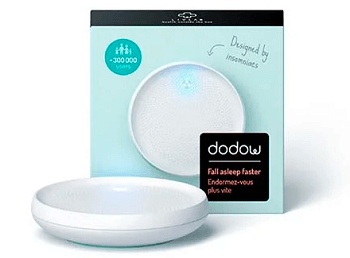
If you are going to try Dodow, I recommend buying it from the official website rather than a random third-party listing.
There are a few reasons for that.
First, the official website is usually where the best promotions appear.
If Dodow is running a limited-time discount, bundle deal, free shipping offer, or travel case discount, you are more likely to find it there.
Second, buying direct helps avoid counterfeit or lookalike products.
Third, the official site is where you are more likely to get the proper guarantee or trial offer.
That mattered to me because sleep products are personal.
What works for one person may not work for another. A money-back trial makes it easier to test Dodow in your own bedroom, with your own sleep routine, and your own stress levels.
My Final Verdict: Is Dodow Worth It?
Dodow is worth trying if your biggest sleep problem is a racing mind, bedtime stress, or waking up in the middle of the night. After my 30-day test, I found it most helpful as a simple, natural, drug-free relaxation tool that made falling asleep feel less forced.
After using Dodow for 30 days, I would not describe it as a miracle.
I would describe it as a genuinely useful sleep routine tool.
And honestly, that is more believable to me.
Dodow did not erase every bad night. It did not make stress disappear. It did not turn me into someone who falls asleep the second my head hits the pillow.
But it did help me do something I had been struggling to do on my own: slow down.
It helped me breathe more steadily.
It helped me stop reaching for my phone.
It helped me feel less frustrated at bedtime.
It gave my mind a calm, repetitive focus when my thoughts wanted to run in every direction.
Most importantly, it helped me stop treating sleep like a battle.
That was the biggest win.
For me, Dodow is best for people who do not necessarily need stronger sleep interventions but do need help calming their body and mind before bed.
If your issue is occasional sleeplessness, Sunday night anxiety, stress, overthinking, or middle-of-the-night wakeups, I think Dodow is worth considering.
If your sleep issues are severe, medical, or long-term, I would not rely on Dodow alone. Talk to a healthcare professional and treat Dodow as a possible supportive routine tool, not a cure.
Would I keep using it?
Yes.
Not every single night, but definitely on the nights when I feel wired, mentally cluttered, or tempted to scroll.
Dodow earned a permanent spot on my nightstand because it is simple, quiet, natural, and easy to use when I need it.
FAQ: Dodow Review 2026
Still wondering whether Dodow is the right sleep aid for you? Below, we’ve answered the most common questions about how Dodow works, who it’s best for, travel use, safety, batteries, blue light, and what to expect before you buy.
Is Dodow TSA-approved?
Dodow is a small, battery-powered sleep aid device, so it is generally travel-friendly and easy to pack in a carry-on bag. Since it uses AAA batteries and does not contain liquid or sharp parts, most travelers should have no issue packing it.
TSA rules can change, so always follow current travel guidelines for batteries and electronics.
Does Dodow actually help you fall asleep?
Dodow may help people fall asleep by guiding slow, rhythmic breathing and shifting attention away from racing thoughts. In my 30-day test, it helped me relax faster, stop checking the clock as much, and make bedtime feel less stressful.
Is Dodow 100% natural?
Dodow is promoted as a natural sleep aid because it does not rely on medication, supplements, sound, or screen-based content. It uses guided breathing and a pulsing light to support relaxation before sleep.
Can Dodow help with fast and deep sleep?
Dodow is designed to help users relax and fall asleep more naturally by slowing breathing and calming the mind. While individual results vary, I found that it helped me settle down faster on many nights and made my sleep routine feel calmer and less interrupted.
Is Dodow safe to use every night?
Dodow is drug-free, silent, and non-invasive, so many people can use it nightly as part of a relaxing bedtime routine. People with breathing conditions, serious insomnia, sleep apnea, panic attacks, or chronic sleep issues should consult a healthcare professional.
Can children use Dodow?
Dodow is described as suitable for ages 6. Parents should supervise use, make sure the child is comfortable with the breathing rhythm, and speak with a healthcare professional if the child has serious sleep, anxiety, or breathing issues.
Does Dodow use blue light?
Yes, Dodow uses a soft, low-intensity blue light that pulses on the ceiling to guide breathing. Unlike a phone or tablet screen, Dodow is not designed for scrolling or stimulation. The light functions as a visual breathing rhythm.
Can Dodow replace melatonin?
Dodow is not the same as melatonin. Melatonin is a supplement, while Dodow is a drug-free sleep aid device that uses guided breathing and visual relaxation. It may be a helpful alternative for people who want to avoid relying on nightly supplements.
What batteries does Dodow use?
Dodow uses three AAA batteries. The battery-powered design makes it portable, wireless, and easy to place on a nightstand without adding another charging cable.
Does Dodow come with a travel case?
Some Dodow promotions may include a travel case offer or discount, such as a percentage off the travel case. Availability can change, so it is best to check the official website for the current bundle or travel promo.
Is Dodow good for insomnia?
Dodow may help with occasional sleeplessness, racing thoughts, and bedtime stress, but it should not be treated as a cure for chronic or severe insomnia. It is best viewed as a relaxation tool that can support better sleep hygiene.
Medical Disclaimer
Dodow is a wellness product, not a medical device or treatment. This article is based on personal experience and product research. If you have chronic insomnia, sleep apnea, anxiety, panic attacks, breathing issues, or any serious sleep-related condition, speak with a qualified healthcare professional.
Final Takeaway
After 30 days, my opinion is simple: Dodow is not magic, but it is genuinely helpful if your biggest sleep problem is an overactive mind.
It gave me a quiet, screen-free, drug-free, natural way to calm down before bed. It helped me breathe more slowly, stop reaching for my phone, and feel less pressure around falling asleep.
I still had imperfect nights. Everyone does.
But Dodow made my bedtime routine feel more peaceful, and that made a real difference.
If you are tired of lying awake with racing thoughts, trying random sleep hacks, or depending on your phone to relax, Dodow is worth trying.
Dodow is a small, circular sleep aid device that sits on your nightstand and assists you in falling asleep naturally. The device mainly functions using a soft, little halo light that beams to the ceiling of your room.
- Super portable and wireless device
- Safe for all ages people
- Comes with a 100-night sleep trial
- Simple touchpad for easy control and operation
- The device has no low battery indication
- For some people, the light is too bright
- Not good for the people who have breathing issues