
An adjustable bed can make sleeping, reading, watching TV, and relaxing much more comfortable. But there is one common problem many people run into: the sheets keep slipping off.
Because an adjustable bed bends, lifts, and changes position, regular bedding does not always stay tight the way it would on a standard flat mattress. A fitted sheet may pop off at one corner, bunch up near the middle, or loosen every time the head or foot of the bed is raised.
The easiest way to solve this is to use the right combination of deep-pocket fitted sheets, strong elastic, sheet straps, a Bed Scrunchie, and grippy bedding fabrics. When your sheets fit the mattress properly and have enough tension underneath, they can move with the bed instead of sliding away from it.
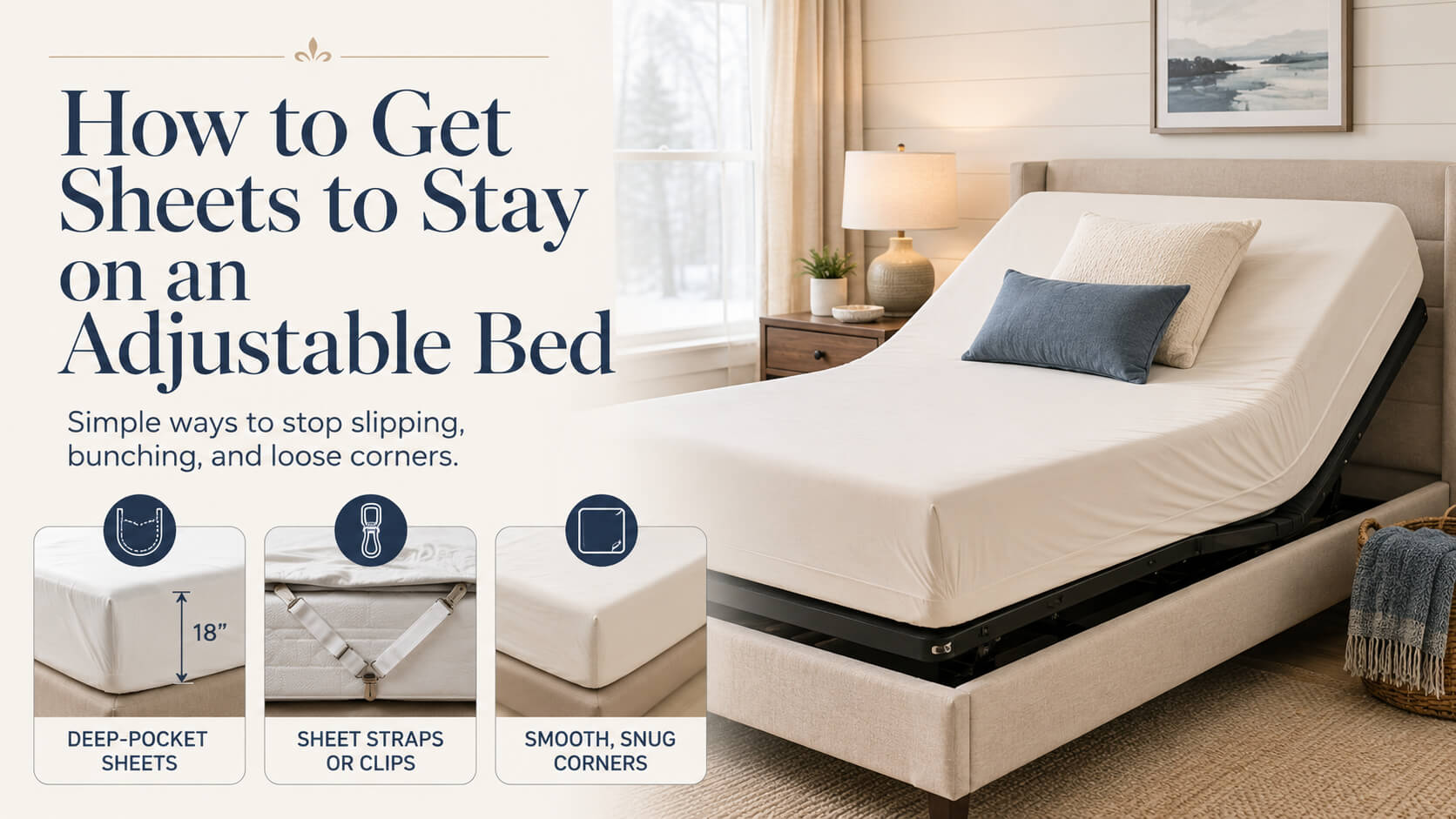
Quick Answer: The Best Way to Stop Sheets From Slipping on an Adjustable Bed
The best way to get sheets to stay on an adjustable bed is to use deep-pocket fitted sheets with full elastic, then secure them with sheet straps or a Bed Scrunchie for extra hold. Cotton, microfiber, and stretchy knit sheets usually stay in place better than very smooth fabrics like satin or silk.
For most adjustable beds, the most reliable setup includes:
- Deep-pocket fitted sheets that match your mattress height
- Strong elastic around the entire edge of the fitted sheet
- Sheet straps, clips, or a Bed Scrunchie under the mattress
- Cotton, microfiber, or jersey knit fabric for better grip
- Split king sheets if you use a split adjustable base
This setup helps the sheet stay tight even when the mattress bends, lifts, or shifts during the night.
Why Sheets Slip Off Adjustable Beds
Sheets slip off adjustable beds because the mattress is constantly changing shape. When the head or foot of the bed rises, the fabric stretches in different directions. If the sheet is too shallow, too loose, too smooth, or too worn out, it cannot hold the corners firmly.
Mattress Movement and Bed Position Changes
Unlike a regular bed, an adjustable bed base moves the mattress into different positions. The head section may lift for reading or watching TV, while the foot section may rise for leg support. Every movement adds tension to the sheet.
If your fitted sheet does not have enough stretch or grip, the corners can slowly pull upward. This is why sheets often come loose after several position changes, even if the bed looked neat when you first made it.
Sheets That Do Not Fit the Mattress Depth
Mattress depth matters a lot. Many adjustable bed mattresses are thicker than standard mattresses, especially if you use a mattress topper, mattress pad, or protector.
If the pocket depth is too shallow, the sheet cannot wrap securely under the mattress. It may look like it fits at first, but once the bed moves, the corners start slipping off.
Weak Elastic Around the Fitted Sheet
A fitted sheet depends on elastic to stay in place. If the elastic is thin, stretched out, or only placed around the corners, it may not hold well on an adjustable bed.
For better results, look for fitted sheets with full elastic around the entire edge. This gives the sheet a stronger grip and helps distribute tension evenly.
Smooth or Slippery Sheet Fabrics
Some fabrics feel luxurious but slide too easily. Satin, silk, and very slick polyester sheets can shift more when the mattress bends. They may also move around more if your pajamas or mattress protector are smooth.
For adjustable beds, fabrics with a little natural grip are usually better. Cotton, microfiber, jersey knit, and bamboo-blend sheets are common options because they are soft but not overly slippery.
Split King and Split Queen Fit Issues
If you have a split king adjustable bed, one large king fitted sheet usually will not work well. Each side of the bed moves separately, so one shared fitted sheet gets pulled in opposite directions.
For this setup, use split king sheets with two separate fitted sheets. Each mattress half can move independently without pulling the other side loose.
Mattress Protectors or Toppers That Shift
Sometimes the sheet is not the only problem. A loose mattress protector or topper can move underneath the fitted sheet, causing everything above it to slide as well.
If your mattress pad wrinkles, bunches, or shifts when the bed moves, choose one with elastic corners, a fitted skirt, or a textured surface.
How to Get Sheets to Stay on an Adjustable Bed
You can stop sheets from slipping by improving the fit, grip, and tension of your bedding. The goal is simple: make the sheet hug the mattress tightly enough to handle movement without popping loose.
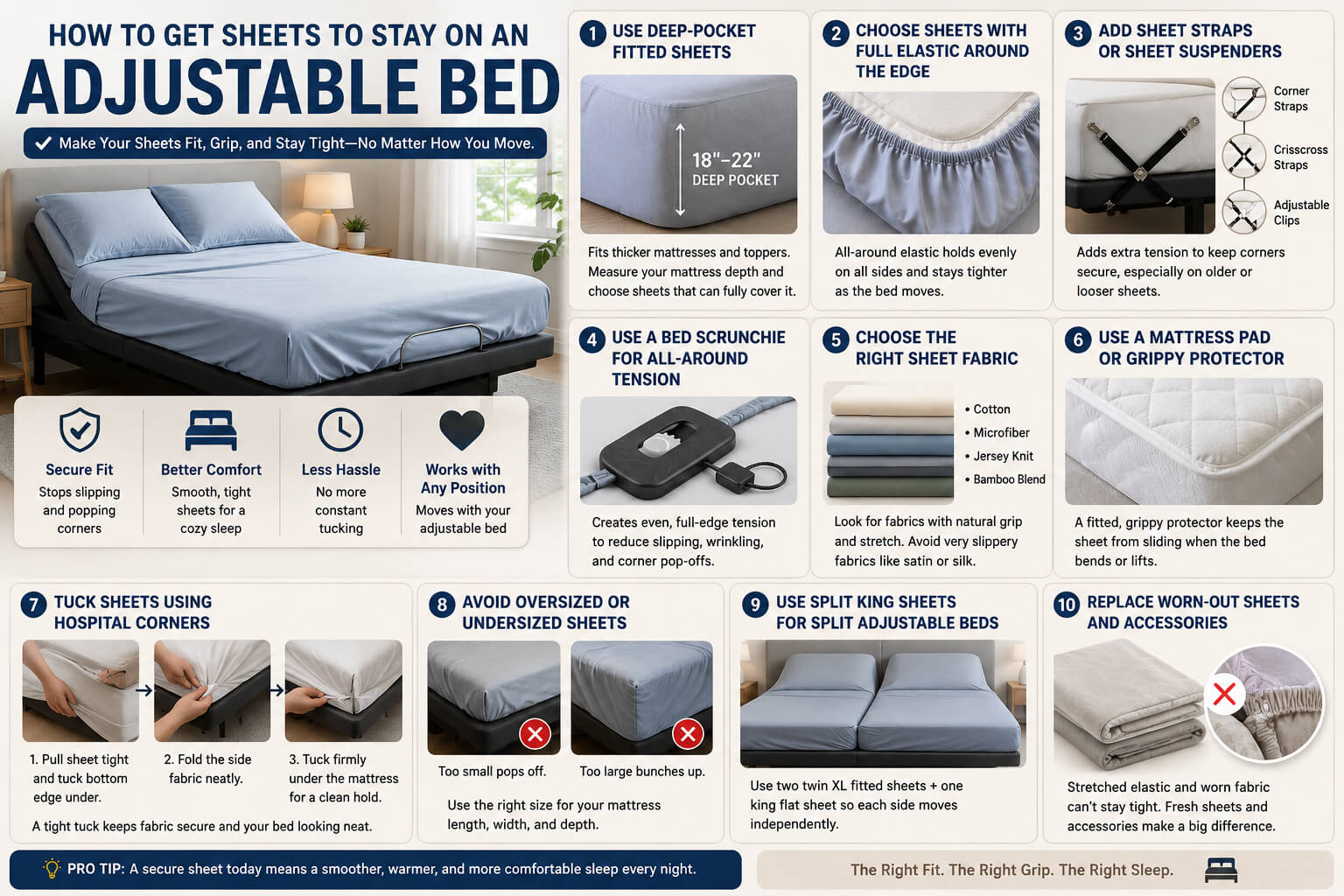
1. Use Deep-Pocket Fitted Sheets
Deep-pocket fitted sheets are one of the best choices for adjustable beds. They are designed to fit thicker mattresses and give the corners more fabric to wrap underneath.
Before buying, measure your mattress depth from top to bottom. Then choose sheets with a pocket depth that can fully cover that height. If you use a topper or thick mattress pad, include that extra height in your measurement.
A deep-pocket sheet should not feel stretched to its limit. It should tuck under the mattress with enough extra fabric to stay secure.
2. Choose Sheets With Full Elastic Around the Edge
Not all fitted sheets are made the same. Some only have elastic at the corners, while better options have elastic around the full perimeter.
For an adjustable bed, full elastic is usually the stronger choice. It helps the sheet hold evenly along all sides, not just at four corners. This makes it less likely to loosen when the bed bends.
When shopping, check the product description for phrases like all-around elastic, full elastic, reinforced corners, or extra-secure fitted sheet.
3. Add Sheet Straps or Sheet Suspenders
Sheet straps, also called sheet suspenders, clip to the fitted sheet under the mattress. They pull the corners toward each other and add extra tension.
There are a few common styles:
- Corner straps that connect across each mattress corner
- Crisscross straps that run underneath the mattress
- Adjustable clips that let you tighten or loosen the hold
Sheet straps are helpful if your fitted sheet fits decently but still pops off when the bed moves. They are also useful for older sheets with weaker elastic.
4. Use a Bed Scrunchie for All-Around Sheet Tension
A Bed Scrunchie is a sheet-tightening accessory that helps secure the sheet around the mattress. Instead of only pulling at the corners, it is designed to create tension around the sheet edge.
This can be useful for adjustable beds because the sheet needs steady support as the mattress changes shape. A Bed Scrunchie can help reduce loose fabric, corner popping, and wrinkling.
It is especially helpful if you want a tighter, cleaner bed surface without constantly re-tucking the sheet after every adjustment.
5. Choose the Right Sheet Fabric
Fabric choice can affect how well sheets stay in place. For adjustable beds, choose bedding that feels comfortable but still has enough grip.
Good options include:
- Cotton sheets for breathability and a natural feel
- Microfiber sheets for softness and easy care
- Jersey knit sheets for stretch and flexibility
- Bamboo-blend sheets for softness with moderate grip
Try to avoid extremely slippery fabrics if your main problem is sheet movement. Satin and silk may feel smooth, but they are more likely to slide on a moving mattress.
6. Use a Mattress Pad or Grippy Mattress Protector
A mattress pad can add comfort, but it can also help hold sheets in place if it has the right texture. A slightly grippy or quilted surface gives the fitted sheet something to hold onto.
Choose a mattress protector that fits tightly and does not bunch up. If the protector shifts, the fitted sheet will shift with it.
For best results, use a fitted mattress protector with strong elastic and pair it with a deep-pocket fitted sheet.
7. Tuck Sheets Using Hospital Corners
A tight tuck can make a noticeable difference. Hospital corners create a clean fold that keeps extra fabric secured under the mattress.
To do this, pull the sheet smooth, tuck the bottom edge under the mattress, fold the side fabric neatly, and tuck it firmly underneath. This works best with flat sheets, but it can also help control loose fabric around the fitted sheet edges.
Even with straps or a Bed Scrunchie, a tight tuck keeps the bed looking cleaner.
8. Avoid Oversized or Undersized Sheets
Sheets that are too small will pop off because they cannot cover the mattress properly. Sheets that are too large can bunch up and slide because there is too much loose fabric.
The right size should match your mattress length, width, and depth. Do not rely only on labels like queen, king, or twin XL. Always check the actual dimensions and pocket depth.
9. Use Split King Sheets for Split Adjustable Beds
For a split adjustable bed, use sheets made specifically for that design. A split king sheet set usually includes two twin XL fitted sheets and one king-size flat sheet.
This allows both sides of the bed to move separately. If one person raises their side, the other side stays neat and undisturbed.
Using one standard king fitted sheet on a split adjustable bed often causes pulling, bunching, and corner lifting.
10. Replace Worn-Out Sheets and Bedding Accessories
Sometimes the problem is not the bed; it is the age of the bedding. If your fitted sheet elastic has stretched out, it will not stay secure no matter how carefully you tuck it.
Replace sheets if they are thin, loose, stretched, rough, or no longer snap back around the mattress. Also check your sheet straps, clips, and mattress protector for signs of wear.
Fresh bedding with strong elastic can solve slipping problems quickly.
Best Sheet Types for Adjustable Beds
The best sheets for adjustable beds are flexible, deep enough, and secure around the edges. They should move with the mattress instead of resisting every bend.
Deep-Pocket Sheets
Deep-pocket sheets are ideal for many adjustable beds because they cover thicker mattresses more securely. They are especially useful if you have a mattress pad or topper.
Extra-Deep-Pocket Sheets
If your mattress is very tall, consider extra-deep-pocket sheets. These are made for thicker mattress profiles and can provide more fabric to tuck underneath.
Stretchy Jersey or Knit Sheets
Jersey knit sheets stretch easily, which helps them move with an adjustable mattress. They can be a good choice if you raise and lower your bed often.
Cotton Sheets
Cotton is breathable, comfortable, and less slippery than satin or silk. For many sleepers, cotton offers a good balance of softness and grip.
Microfiber Sheets
Microfiber sheets are soft, lightweight, and usually budget-friendly. They can work well on adjustable beds when paired with strong elastic or sheet straps.
Split King Adjustable Bed Sheet Sets
For split king beds, split sheet sets are the best option. Each fitted sheet stays on its own mattress section, so the bed can move without pulling the sheet loose.
How to Choose the Right Sheet Size for an Adjustable Bed
Choosing the correct sheet size is one of the most important steps. Even high-quality sheets will slip if the size is wrong.
Measure Mattress Length and Width
Start by measuring the mattress from side to side and top to bottom. Common adjustable bed sizes include twin XL, queen, king, California king, and split king.
Do not guess based on the bed frame alone. Measure the mattress itself.
Measure Mattress Depth
Next, measure from the top of the mattress to the bottom edge. This tells you the pocket depth you need.
If your mattress is 14 inches deep, a fitted sheet with a 10-inch pocket will likely slip. Choose a pocket depth that fully covers the mattress and tucks underneath.
Account for Mattress Toppers or Pads
If you use a topper, mattress pad, or thick protector, include that extra height. A 12-inch mattress with a 3-inch topper needs sheets that can fit at least 15 inches of depth.
Check the Pocket Depth Before Buying
Always read the sheet label or product description. Look for the pocket depth, not just the bed size. A queen sheet may fit a standard queen mattress but still be too shallow for an adjustable bed.
Choose Split Sheets for Dual Adjustable Bases
If both sides of your bed move separately, use split sheets. This prevents one person’s side from pulling the other person’s sheet loose.
Sheet Straps vs. Bed Scrunchie: Which Works Better?
Both sheet straps and a Bed Scrunchie can help keep sheets on an adjustable bed, but they work in slightly different ways.
| Option | How It Works | Best For |
| Sheet straps | Clip to sheet corners and pull them tight underneath | Minor corner slipping |
| Crisscross straps | Run under the mattress for stronger tension | Sheets that pop off often |
| Bed Scrunchie | Tightens the sheet around the mattress edge | All-around sheet security |
How Regular Sheet Straps Work
Regular sheet straps attach to the sheet corners. They pull the fabric inward and help stop the corners from lifting. They are simple, affordable, and useful for light slipping problems.
How a Bed Scrunchie Works
A Bed Scrunchie is designed to tighten the sheet more evenly around the mattress. This can create a smoother and more secure fit, especially when the mattress bends.
When Sheet Straps Are Enough
Sheet straps may be enough if your sheets mostly fit but one or two corners keep slipping. They are also a good option if your fitted sheet has started to loosen but is not completely worn out.
When a Bed Scrunchie May Be the Better Option
A Bed Scrunchie may be better if your sheet bunches across the surface, loosens on multiple sides, or needs stronger all-around tension. It can also help if you want a neater bed with fewer wrinkles.
Common Mistakes That Make Sheets Slip More
Many sheet problems come from small bedding mistakes. Avoiding these can save you from constantly remaking the bed.
Using Regular Sheets on a Thick Adjustable Mattress
Standard sheets may not have enough pocket depth for a thicker adjustable mattress. If the corners barely reach underneath, the sheet will not stay secure.
Buying Sheets Without Checking Pocket Depth
The sheet size and pocket depth are not the same thing. A king sheet can still be too shallow for a king mattress. Always check both measurements.
Choosing Satin or Silk Sheets for a Moving Bed
Very smooth sheets can slide more easily when the mattress moves. If slipping is a problem, switch to a fabric with more grip.
Ignoring Old Elastic
If the elastic is stretched out, the sheet cannot hold properly. No amount of tucking will fully fix elastic that has lost its strength.
Using One King Fitted Sheet on a Split King Bed
A split king adjustable bed needs two separate fitted sheets. One shared fitted sheet will pull, wrinkle, and loosen as each side moves.
When to Replace Sheets, Straps, or Mattress Protectors
Bedding does not last forever. If your sheets used to stay in place but now slip constantly, worn-out materials may be the reason.
Signs Your Fitted Sheet Elastic Is Worn Out
Replace your fitted sheet if the corners feel loose, the elastic looks stretched, or the sheet no longer hugs the mattress tightly.
Signs Your Sheets Are Too Stretched or Thin
Thin spots, rough texture, fraying, and sagging fabric are signs that your sheets are past their best condition. Worn sheets are more likely to bunch and slide.
Signs Your Mattress Protector Is Causing Slippage
If your mattress protector moves underneath the sheet, replace it with a fitted protector that has stronger elastic or a better grip surface.
When Sheet Straps Need Replacing
If clips no longer hold, straps lose stretch, or adjusters slip loose, it is time for a new set. Weak straps cannot maintain enough tension.
Extra Tips for Keeping an Adjustable Bed Neat and Comfortable
A few simple habits can help your bedding stay smoother for longer.
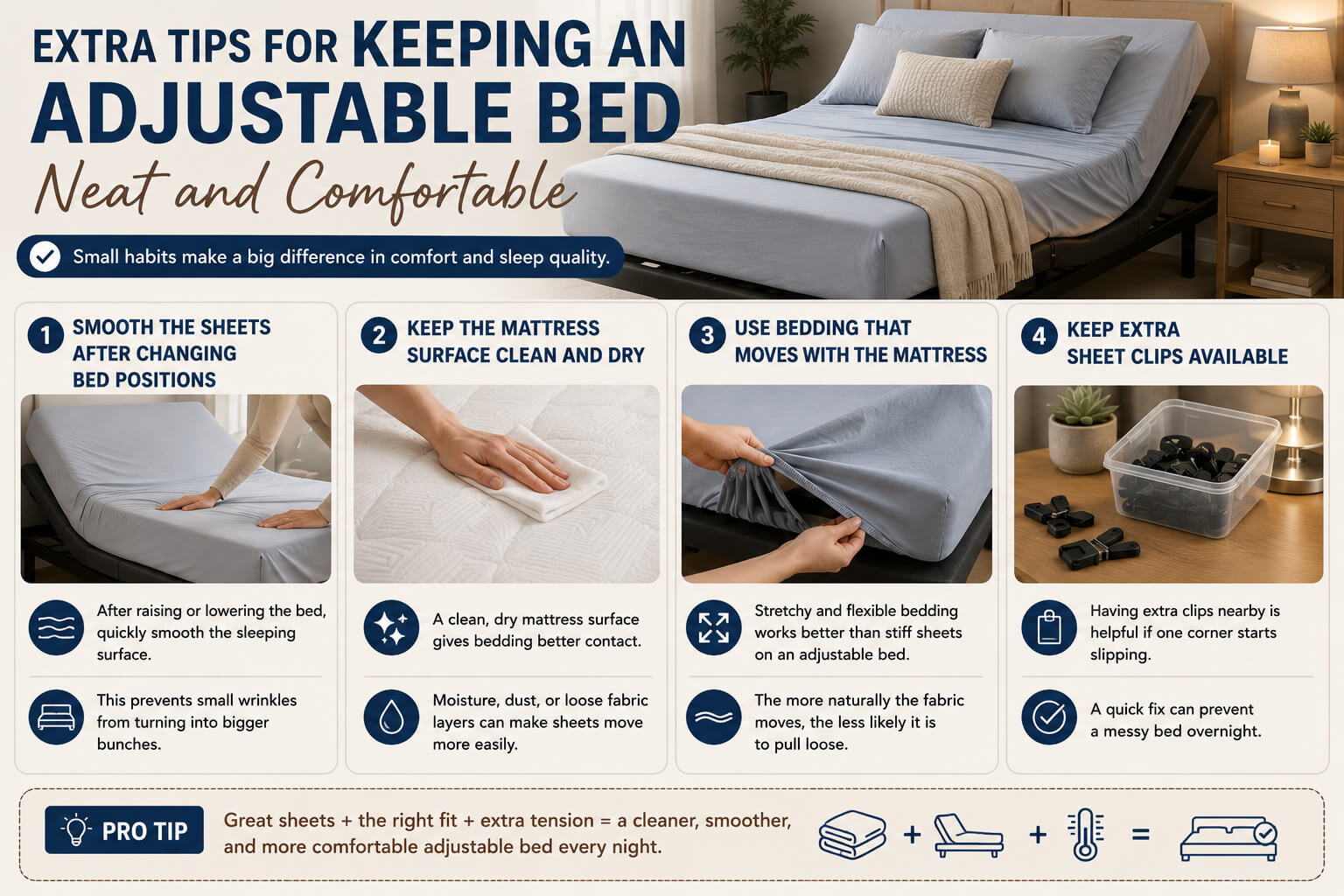
Smooth the Sheets After Changing Bed Positions
After raising or lowering the bed, quickly smooth the sleeping surface. This prevents small wrinkles from turning into bigger bunches.
Keep the Mattress Surface Clean and Dry
A clean, dry mattress surface gives bedding better contact. Moisture, dust, or loose fabric layers can make sheets move more easily.
Use Bedding That Moves With the Mattress
Stretchy and flexible bedding works better than stiff sheets on an adjustable bed. The more naturally the fabric moves, the less likely it is to pull loose.
Keep Extra Sheet Clips Available
Having extra clips nearby is helpful if one corner starts slipping. A quick fix can prevent a messy bed overnight.
FAQs About Keeping Sheets on Adjustable Beds
Keeping sheets secure on an adjustable bed can be difficult because the mattress bends, lifts, and changes position throughout the night. The FAQs below answer common questions about sheet sizes, pocket depth, fabric choices, sheet clips, split king beds, and Bed Scrunchie compatibility, helping you choose a setup that stays smooth and secure as the bed moves.
Can You Use Regular Sheets on an Adjustable Bed?
Yes, you can use regular sheets on an adjustable bed, but they may not stay in place well. For better results, use deep-pocket fitted sheets with strong elastic or add sheet straps for extra hold.
Do Adjustable Beds Need Special Sheets?
Adjustable beds do not always need special sheets, but they do need sheets that fit properly. Deep-pocket sheets, stretchy sheets, and split king sheets work better than loose or shallow sheets.
What Pocket Depth Is Best for Adjustable Bed Sheets?
The best pocket depth depends on your mattress height. Measure the mattress, including any topper or pad, then choose a fitted sheet with enough depth to tuck securely underneath.
Do Sheet Clips Work on Adjustable Beds?
Yes, sheet clips can work well on adjustable beds. They help hold the corners tight and reduce the chance of the fitted sheet popping off when the mattress moves.
Will a Bed Scrunchie Work on a Split King Adjustable Bed?
A Bed Scrunchie may work depending on the sheet style and bed setup. For a split king adjustable bed, make sure each side has its own fitted sheet so both mattresses can move independently.
Why Does My Fitted Sheet Keep Popping Off One Corner?
One corner may pop off because the sheet is too small, the elastic is weak, or the mattress is too thick for the pocket depth. A corner strap or deeper fitted sheet can help.
Are Cotton or Microfiber Sheets Better for Adjustable Beds?
Both can work well. Cotton is breathable and naturally grippy, while microfiber is soft and easy to care for. The best choice depends on your comfort preference and whether the sheet has strong elastic.
How Often Should Adjustable Bed Sheets Be Replaced?
Sheets often need replacing when they become thin, rough, stretched, or loose around the corners. If your fitted sheet no longer stays tight, it is probably time for a new one.
Final Thoughts: The Easiest Way to Keep Sheets Secure on an Adjustable Bed
Keeping sheets on an adjustable bed is mostly about getting the right fit, fabric, and tension. If your sheets are too shallow, too slippery, or too loose, they will likely move every time the bed changes position.
Start with deep-pocket fitted sheets that match your mattress depth. Then choose sheets with full elastic and a fabric that has a little grip, such as cotton, microfiber, or jersey knit. If the sheet still moves, add sheet straps or a Bed Scrunchie to hold everything firmly underneath.
For split adjustable beds, use proper split king sheet sets so each side can move without pulling the other side loose.
With the right setup, your adjustable bed can stay smooth, neat, and comfortable without forcing you to fix messy sheets every morning.
