
Cold winter nights can make your bed feel less inviting, especially when the sheets feel chilly, the room has drafts, or your blankets do not hold warmth well. The good news is that creating a warm and cozy winter bed does not require a full bedroom makeover. With the right layers, fabrics, and a few smart accessories, you can turn your bed into the most comfortable place in your home.
The 10 best ways to make your bed warm and cozy for winter include using flannel sheets, layering blankets properly, adding a warm comforter, using a mattress topper, blocking drafts, warming the room, and keeping your sheets tight with Bed Scrunchie. Each small upgrade helps your bed hold heat better and feel softer when you climb in at night.
How to Make Your Bed Warm and Cozy for Winter: Quick Answer
To make your bed warm and cozy for winter, start with warm sheets, add breathable blanket layers, use a winter comforter, and stop cold air from entering your bedroom. A mattress topper can add insulation underneath your body, while a hot water bottle or heated blanket can warm the bed before sleep.
For extra comfort, keep your sheets smooth and secure. Loose sheets can bunch up, create cold spots, and make the bed feel messy. A sheet-tightening tool like Bed Scrunchie can help keep the bedding flat, snug, and more comfortable throughout the night.
10 Best Ways to Make Your Bed Warm and Cozy for Winter
Cold winter nights can make your bed feel chilly and uncomfortable, but a few simple changes can turn it into a warm, relaxing retreat. From choosing flannel sheets and layered blankets to adding a winter comforter, mattress topper, draft blockers, and secure bedding, these ten practical ideas will help your bed retain warmth and feel softer, smoother, and more inviting throughout the colder months.

1. Switch to Flannel or Brushed Microfiber Sheets
Your sheets are the first thing your body touches, so they play a major role in winter comfort. Flannel sheets are one of the best choices for cold weather because they feel soft, warm, and less icy than regular cotton sheets. The brushed surface helps create a cozy feel as soon as you get into bed.
Brushed microfiber sheets are another good option if you want something soft and budget-friendly. They usually feel warmer at first touch and are easy to wash. If your current sheets feel cold or thin, replacing them with flannel or microfiber is one of the fastest ways to make your bed feel better in winter.
2. Build Warmth With Smart Blanket Layers
Layering works better than using one extremely heavy blanket. When you use multiple layers, warm air gets trapped between them, helping your body stay warmer without feeling weighed down. This also lets you adjust your comfort during the night.
A good winter bedding setup can include a fitted sheet, a flat sheet, a fleece or wool blanket, and a comforter on top. You can also place a soft throw blanket near the foot of the bed for extra warmth around your legs and feet. The key is to use layers that feel warm but still allow your body to breathe.
3. Use a Heated Blanket Safely Before Bed
A heated blanket can make a cold bed feel warm within minutes. It is especially helpful if your bedroom gets very chilly at night. Many people like turning it on before bedtime, letting it warm the sheets, and then turning it off when they get into bed.
When using a heated blanket, always follow the safety instructions. Choose one with adjustable settings and an automatic shut-off feature if possible. Avoid folding it while it is on, and do not cover it with heavy items unless the manufacturer says it is safe. Used correctly, a heated blanket can be a simple and effective winter comfort upgrade.
4. Warm Cold Spots With a Hot Water Bottle
A hot water bottle is a classic winter bedding trick that still works very well. It is affordable, simple, and does not require electricity. You can place it near your feet or in the middle of the bed a few minutes before sleep to reduce the cold feeling under the covers.
Make sure the bottle is sealed tightly and covered with a soft fabric sleeve to avoid direct heat on your skin. This method is especially useful for people who often wake up with cold feet or do not want to use electric bedding products.
5. Add a Winter-Weight Comforter or Duvet
A comforter or duvet is usually the main warmth layer on a winter bed. If your current comforter feels too thin, consider switching to a winter-weight comforter. Down and down-alternative comforters are both popular because they can trap heat while still feeling soft and comfortable.
Choose a comforter that covers the mattress well and hangs slightly over the sides. This helps reduce open spaces where cold air can enter. If you already have a good comforter but want extra warmth, add a flannel or microfiber duvet cover for a softer, warmer feel.
6. Use a Mattress Topper or Fleece Mattress Protector
Sometimes the cold feeling comes from underneath your body, not just from the air above you. A mattress can feel cool during winter, especially if it is firm, thin, or placed in a cold room. A mattress topper adds a layer of insulation between your body and the mattress.
Memory foam, wool, and plush fiber toppers can all help make the bed feel warmer and softer. A fleece mattress protector is another easy option. It sits under your sheet and adds a cozy layer without changing the look of your bed. This is a smart upgrade if your bed feels cold even when you use enough blankets.
7. Keep Sheets Tight and Smooth With Bed Scrunchie
Loose sheets can make your bed feel less comfortable in winter. When sheets wrinkle, slide, or lift from the corners, they can create cold pockets and uneven areas under your body. Bed Scrunchie helps solve this by pulling the sheet tight from all sides.
A smoother sheet surface feels more comfortable and helps your bedding layers sit properly. Bed Scrunchie can work with fitted sheets and flat sheets, making it useful for different bedding setups. It is especially helpful if your sheets often pop off the corners, bunch up overnight, or look messy in the morning.
8. Wear Breathable Warm Sleepwear and Socks
Your bedding matters, but what you wear to bed also affects how warm you feel. Choose warm sleepwear made from fleece, brushed cotton, or thermal fabric. These materials help hold body heat without feeling too stiff.
Socks can also make a big difference because cold feet often make the whole body feel colder. Pick soft, breathable socks that are not too tight. Avoid wearing too many thick layers, though. If you overheat and sweat, you may wake up uncomfortable later in the night.
9. Block Drafts Around Windows, Doors, and Floors
Even the best bedding will not feel warm if cold air keeps entering your room. Check for drafts near windows, doors, and floors. Small gaps can make the bedroom feel colder and cause your bed to lose warmth faster.
Use thick curtains, door draft stoppers, or rolled towels to block cold air. If your floor feels cold, place a rug beside the bed. This makes the room feel warmer and gives your feet a softer place to land in the morning. Draft control is one of the simplest ways to improve winter bedroom comfort.
10. Warm the Bedroom Before You Sleep
A slightly warmer room makes your bed feel cozy much faster. You do not need to make the bedroom hot. Just warming it before bedtime can reduce the chill in your sheets and blankets.
Use your home heating system or a safe portable heater if needed. Keep any heater away from curtains, bedding, and furniture. Do not leave unsafe heating devices running while you sleep. Once the room feels comfortable, your bedding can do a better job of holding warmth through the night.
How to Layer Winter Bedding Without Making the Bed Too Heavy
The best winter bedding setup uses smart layering, not just extra weight. A very heavy bed can feel cozy at first, but it may become uncomfortable if it restricts movement or causes overheating. Instead, use layers that trap warmth while still feeling breathable.
Start with warm sheets, then add a medium blanket, followed by a comforter or duvet. If you need more warmth, place a throw blanket only over the lower half of the bed. This keeps your feet and legs warm without making your whole body feel trapped.
Good winter materials include flannel, fleece, wool, brushed microfiber, and down-alternative fill. These materials help hold warmth while keeping the bed soft. If you wake up sweaty, restless, or too warm, remove one layer or switch to a more breathable blanket.
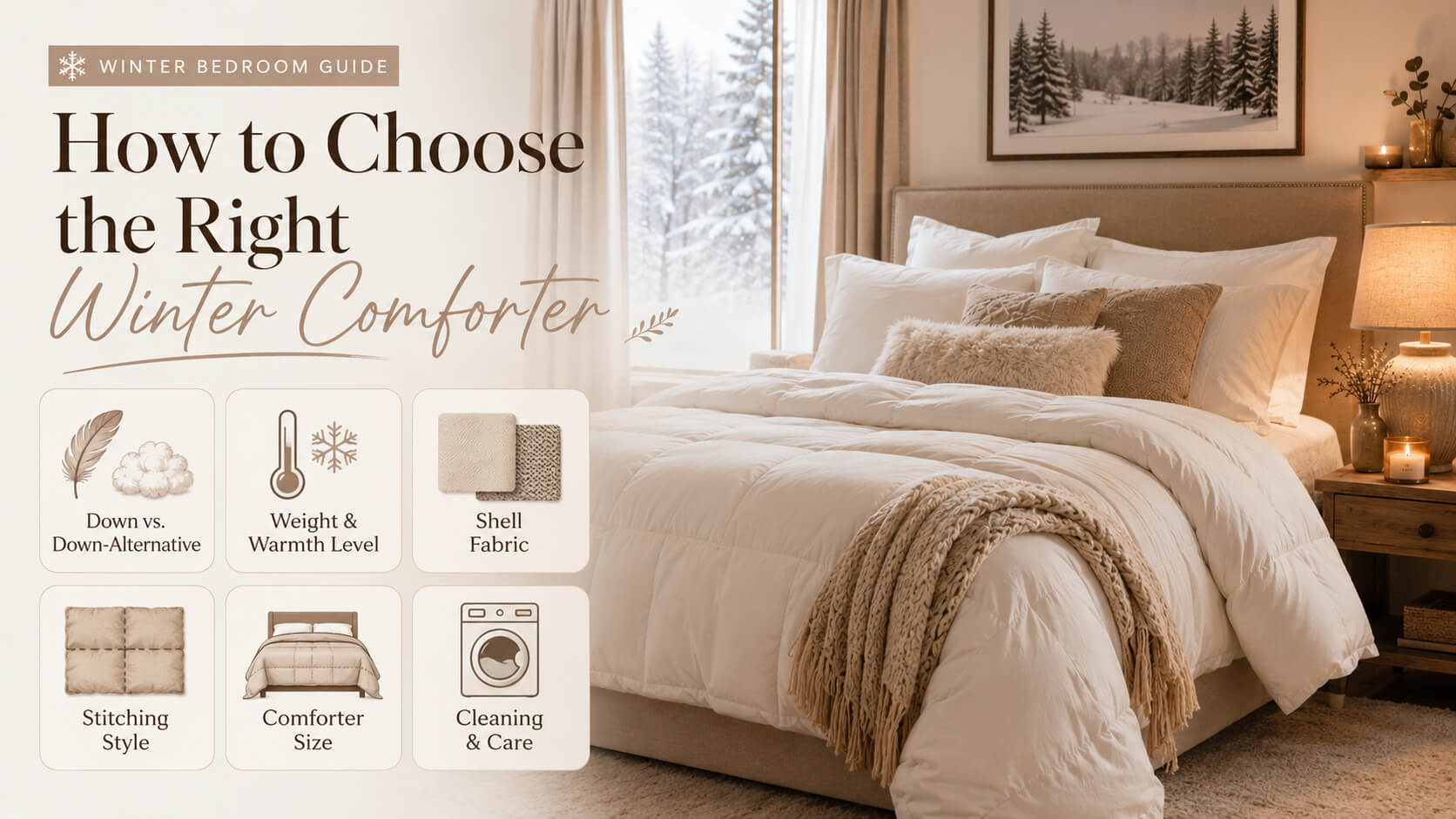
How to Choose the Right Winter Comforter
Choosing the right winter comforter depends on your room temperature, sleep habits, and preferred bedding feel. Some people like a fluffy, lightweight comforter, while others prefer a heavier blanket-like feel. The best comforter should keep you warm without making you overheat.
Down vs. Down-Alternative Fill
Down comforters are known for being warm, fluffy, and lightweight. They trap heat well without feeling too bulky. Down-alternative comforters are a good option if you want something hypoallergenic, easier to maintain, or usually more affordable.
Both types can work well for winter. Focus on warmth level, stitching quality, and care instructions before buying.
Comforter Weight and Warmth Level
Not every thick comforter is warm, and not every warm comforter is heavy. Look for terms like winter-weight, extra-warm, or all-season. If your bedroom stays cold, a winter-weight comforter may be the best choice. If your room is only mildly cool, an all-season option may be enough.
Shell Fabric: Cotton, Flannel, or Microfiber
The outer fabric also affects how the comforter feels. Cotton is breathable and soft, but it can feel cool at first. Flannel and microfiber usually feel warmer to the touch. If your comforter feels chilly, changing the duvet cover may solve the problem without replacing the whole comforter.
Stitching Style and Fill Distribution
Good stitching keeps the filling evenly spread across the comforter. Box stitching or baffle-box construction helps prevent the fill from shifting to one side. This matters because thin spots can let heat escape and make some parts of the bed feel colder.
Choosing the Right Comforter Size
A comforter that is too small will not cover you properly. For winter, choose one that drapes over the sides of the mattress. This helps seal in warmth and makes the bed feel more secure. Many people prefer sizing up for a cozier winter look and feel.
Cleaning and Care Requirements
Before buying a comforter, check how it should be cleaned. Some are machine-washable, while others need dry cleaning. Easy-care bedding is more practical, especially during winter when comforters are used every night.
Winter Bedding Accessories That Make a Noticeable Difference
Small bedding accessories can make your winter bed feel much warmer without requiring major changes. These items are useful when your basic sheets and blankets are not enough.
A Bed Scrunchie or sheet-tightening strap keeps sheets flat and secure. This prevents bunching, slipping, and cold air pockets under the sheet.
A draft stopper pillow blocks cold air from entering under the bedroom door. It is simple, affordable, and useful in older homes or drafty rooms.
A flannel duvet cover adds softness and warmth to your comforter. It is an easy upgrade if your current duvet cover feels too cool.
A heated foot warmer is ideal if your feet stay cold even under blankets. It targets the coldest area without heating the entire bed.
A bedside heating pad can warm a small area of the bed before sleep. Always turn it off according to the product instructions.
Thermal curtains help block cold air from windows, especially if your bed is close to an exterior wall.
A thick rug beside the bed keeps your feet away from cold flooring and makes the room feel more comfortable overall.
Why Bed Scrunchie Helps Make a Winter Bed Feel Cozier
Bed Scrunchie does not create heat by itself, but it helps your bedding feel warmer and more organized. It keeps the sheet tight around the mattress, which reduces loose fabric, wrinkles, and cold gaps.
In winter, a smooth sheet surface matters more than many people realize. When sheets bunch up, they can feel uncomfortable and allow cold air to settle in uneven spaces. A tight sheet gives your body a more consistent surface and helps your blankets and comforter sit better on top.
Bed Scrunchie is also useful because it works with different mattress sizes and sheet styles. Whether you use fitted sheets or flat sheets, it can help keep the bedding in place. For people who move a lot while sleeping, this can reduce the need to fix the bed every morning.
A neat bed also feels more inviting. When the sheets stay tight, the entire bed looks cleaner, smoother, and more hotel-like.
How Often Should You Rotate and Wash Winter Bedding?
Winter bedding needs regular care because thick layers collect sweat, body oils, dust, and odors. Clean bedding also feels softer and warmer.
Rotate comforters and blankets every couple of weeks. This helps prevent one side from becoming flat or worn out faster than the other. If your comforter has fill inside, rotating it also helps keep the warmth more evenly distributed.
Sheets and pillowcases should usually be washed weekly or every other week. If you sweat at night, sleep with pets, or use heavy skincare products, wash them more often.
Comforters, blankets, duvet covers, and mattress protectors should be cleaned based on their care labels. Some items can be machine-washed, while others need special care. Signs your bedding needs freshening include musty smells, visible flattening, reduced softness, or a colder feel than usual.
Budget-Friendly Tips for Creating a Cozy Winter Bed
You do not need to spend a lot of money to make your bed warmer. The smartest approach is to upgrade one layer at a time.
If your sheets feel cold, start with flannel or microfiber sheets. If your mattress feels cold, add a mattress topper or fleece protector. If your comforter is too thin, look for winter bedding deals during off-season sales.
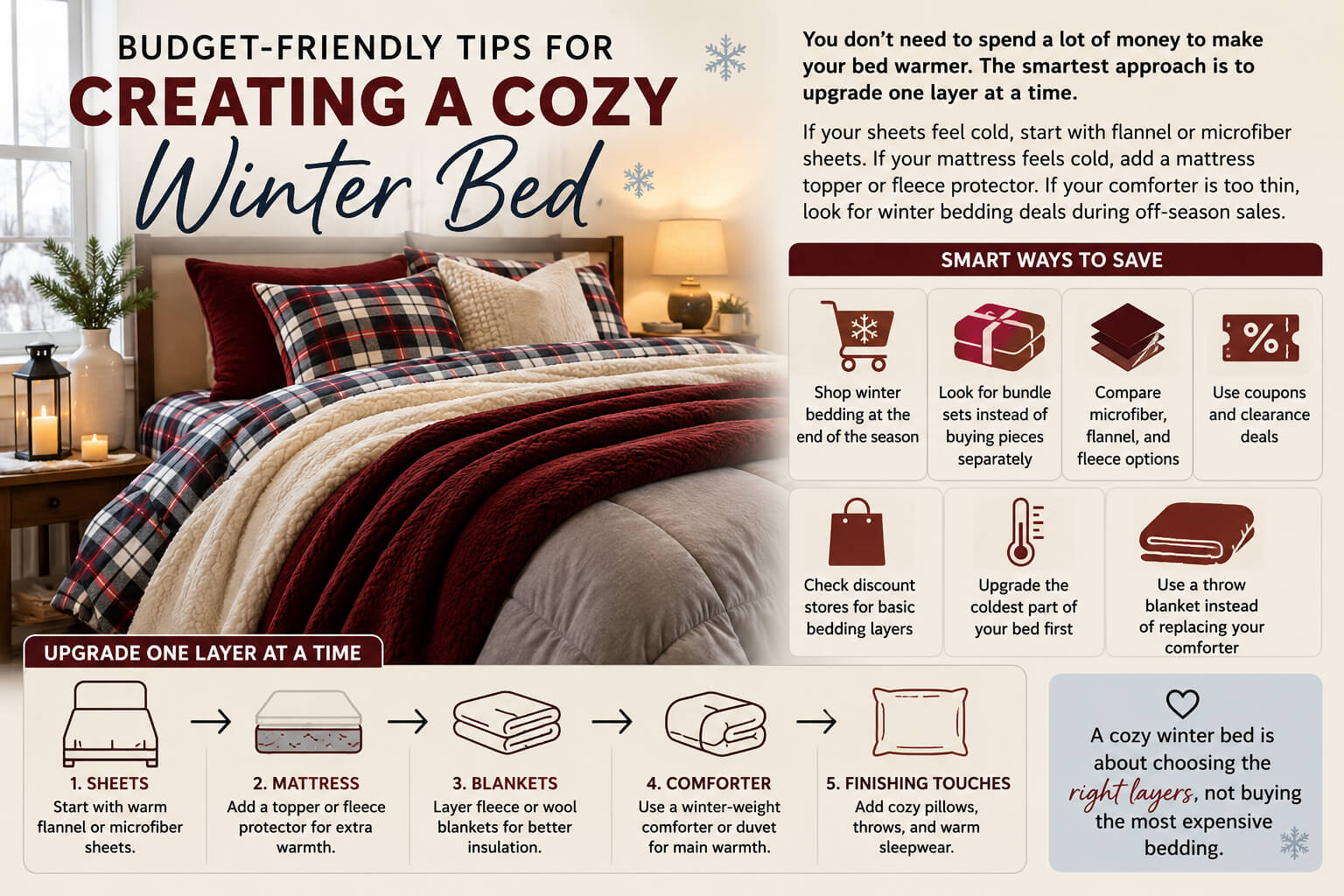
Here are a few simple ways to save:
- Shop winter bedding at the end of the season
- Look for bundle sets instead of buying pieces separately
- Compare microfiber, flannel, and fleece options
- Use coupons and clearance deals
- Check discount stores for basic bedding layers
- Upgrade the coldest part of your bed first
- Use a throw blanket instead of replacing your comforter right away
A cozy winter bed is about choosing the right layers, not buying the most expensive bedding.
Common Winter Bedding Mistakes to Avoid
One common mistake is using summer bedding during winter. Thin cotton, linen, and silk may feel nice in warm weather, but they can feel too cool on cold nights. Switching to warmer fabrics can make a noticeable difference.
Another mistake is adding too many heavy layers. Weight does not always mean warmth. If the bedding traps sweat or makes movement difficult, it can hurt your sleep quality.
Ignoring drafts is also a problem. If cold air keeps coming through windows, doors, or floors, your bed will lose warmth faster.
Loose sheets are another issue. Sheets that bunch up or slide off the mattress can create cold spots and discomfort. A product like Bed Scrunchie can help keep the sheet secure and smooth.
Finally, do not forget bedding maintenance. Dirty, flat, or uneven bedding will not feel as warm as clean and properly cared-for layers.
FAQs About Making Your Bed Warm and Cozy for Winter
Creating a warm winter bed involves more than simply adding extra blankets. Questions often arise about the best bedding materials, safe heating methods, mattress toppers, room humidity, and ways to prevent cold spots. The FAQs below explain how to make your bed warmer, more comfortable, and cozier throughout the winter season.
What is the warmest bedding material for winter?
Some of the warmest bedding materials for winter include flannel, fleece, wool, brushed microfiber, down, and down-alternative fill. Flannel and microfiber are great for sheets, while wool, fleece, and insulated comforters are useful for blankets and top layers.
Are flannel sheets better than cotton sheets in winter?
Yes, flannel sheets usually feel warmer than regular cotton sheets in winter. Their brushed texture feels soft and cozy against the skin. Cotton can still work, but flannel is often better for people who dislike cold sheets.
How can I warm my bed without electricity?
You can warm your bed without electricity by using flannel sheets, a hot water bottle, extra blankets, a mattress topper, warm socks, and draft stoppers. These methods help trap body heat naturally.
Is a heated blanket safe to use all night?
Some heated blankets are made for longer use, but you should always follow the product instructions. Many people prefer using a heated blanket before bed and turning it off before sleeping for added safety.
Does a mattress topper make a bed warmer?
Yes, a mattress topper can make a bed warmer by adding insulation between your body and the mattress. Memory foam, wool, and plush fiber toppers can make a cold bed feel softer and warmer.
How do I keep my feet warm in bed?
To keep your feet warm, wear soft socks, place a hot water bottle near your feet, use a heated foot warmer, or add a throw blanket across the lower part of the bed. Warm feet can help your whole body feel more comfortable.
Can room humidity affect how warm my bed feels?
Yes, dry air can make a room feel colder and less comfortable. Balanced humidity can help the bedroom feel more pleasant, especially when indoor heating makes the air too dry.
What bedding should I avoid in winter?
Avoid thin summer sheets, cool-to-the-touch fabrics, and bedding that does not trap warmth well. Lightweight linen, silk, and very thin cotton may feel too cold unless you pair them with warmer layers.
Final Thoughts on Creating a Warm Winter Bed
Making your bed warm and cozy for winter is all about smart layering, warm materials, and small comfort upgrades. You do not need to replace everything at once. Start with the layer that bothers you most, whether that is cold sheets, a thin comforter, a drafty room, or loose bedding.
Use flannel sheets, add breathable blanket layers, choose a warm comforter, and consider a mattress topper if your bed feels cold underneath. Block drafts around the room and warm the space before bedtime when needed.
For a neater and cozier setup, Bed Scrunchie can help keep your sheets tight, smooth, and secure. When your bedding stays in place, your bed feels more comfortable and inviting.
With the right combination of bedding layers and simple winter upgrades, your bed can become a warm, soft, and relaxing retreat throughout the cold season.
