
I didn’t realize how stressful our bedtime routine had become until one random Tuesday night when I found myself standing in the hallway at 10:43 p.m., whispering, “Please just try to sleep,” for what felt like the hundredth time.
The lights were dim. Pajamas were on. The bedtime story was finished. The water cup was filled. The stuffed animals were arranged exactly the “right” way.
And still, my child was wide awake.
Not playful, wide awake. Not defiant, wide awake. More like restless, overtired, emotionally stuck, wide awake.
That was the part that got to me.
As a parent, I could handle the usual bedtime negotiations. One more hug. One more story. One more trip to the bathroom. But this felt different. I could tell my child wanted to relax, but didn’t know how.
And honestly? I understood that feeling too well.
After long workdays, endless notifications, school reminders, bills, errands, and the usual household chaos, I also had trouble shutting my brain off. So when my child said, “I can’t make my body calm,” it hit me harder than expected.
I had tried the usual things: soft music, bedtime stories, deep breathing prompts, screen cutoffs, calming routines, and earlier lights-out. Some helped for a night or two. Most didn’t stick.
That’s what led me to Moonbuddy.
At first, I was skeptical. A small breathing companion that gently expands and contracts in a child’s hands sounded almost too simple. No app. No screen. No sound machine. No complicated setup. Just a soft little device that guides breathing through touch.
But after seeing how much bedtime stress was affecting our evenings, I decided to test it for myself.
During my 30-day test, Moonbuddy slowly became one of the few calming tools that didn’t feel forced. My child didn’t see it as another “sleep device.” They treated it more like a little bedtime buddy.
And that changed everything.
Moonbuddy did not magically solve every difficult night. It did not turn my child into a perfect sleeper overnight. But it did something I valued even more: it gave my child a simple, screen-free way to slow down, breathe, and feel a little more in control.
Moonbuddy is not intended to diagnose, treat, cure, or prevent any medical condition. My experience is personal, and results may vary. But if your child struggles to settle down at night, this review will help you decide whether Moonbuddy is worth trying.
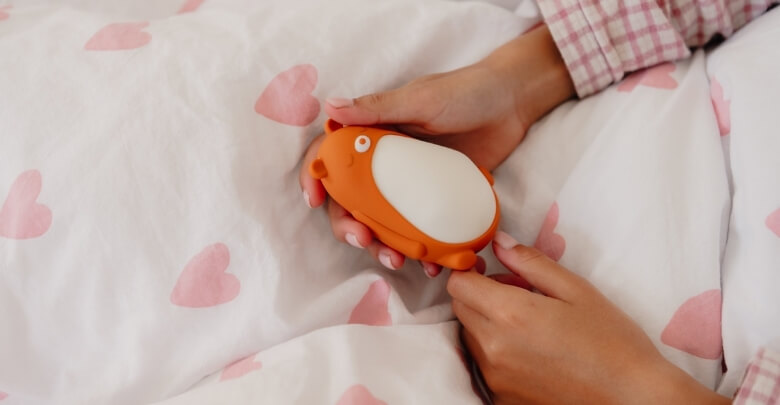
Moonbuddy is a small breathing companion made to help children slow down and relax when their minds feel busy. It is not a toy with lights or sounds, and it does not need a phone, app, or screen to work.
- Screen-free design
- One-button operation
- Soft, friendly look helps kids accept it
- Automatic session timing
- It focuses only on breathing guidance
What Is Moonbuddy?
Moonbuddy is a screen-free breathing companion designed to help children slow down, relax, and practice calm breathing through touch. It gently expands and contracts in the hand, giving kids a simple rhythm to follow when they feel restless, stressed, or overstimulated before bedtime.

In simple terms, Moonbuddy is a small calming device that acts like a guided breathing buddy.
Instead of telling a child, “Take deep breaths,” Moonbuddy shows them what that feels like. The device slowly rises and falls, and the child follows along by breathing in as it expands and breathing out as it contracts.
That’s what made it different from other bedtime tools I had tried.
A lot of relaxation products for kids rely on screens, apps, music, lights, or verbal instructions. Moonbuddy takes a quieter approach. It gives children something physical to hold, which makes the breathing exercise feel more natural in our house.
My child didn’t need to understand mindfulness as a concept. They didn’t need to sit perfectly still. They didn’t need to listen to a long meditation track.
They just held Moonbuddy and followed its breathing rhythm.
Moonbuddy is designed as a child-friendly breathing companion that works without a phone, app, screen, or music. It uses gentle physical movement to guide children through breathing.
A Calming Tool Made for Kids
Moonbuddy feels less like a gadget and more like a comfort object with a purpose.
For children who struggle with big feelings, nighttime restlessness, separation worries, or overstimulation after a busy day, a physical breathing cue can be easier to follow than spoken instructions.
In my experience, it worked best when I introduced it as a bedtime buddy instead of a “sleep solution.”
That small wording change mattered.
When I said, “Let’s use this to calm your body,” my child was much more open to it than if I had made it sound like a medical device or a strict routine.
Why I Decided to Try Moonbuddy
I decided to try Moonbuddy because our bedtime routine had become stressful, inconsistent, and emotionally exhausting. I wanted a gentle, screen-free relaxation tool that could help my child slow down without medication, apps, bright lights, or complicated breathing instructions.
My breaking point came after a week where every night felt like a small emotional marathon.
Nothing dramatic happened. That was almost the problem. It was just normal family chaos piling up.
School. Work. Groceries. Dinner. Homework. Dishes. Laundry. Screens. More screens. A little whining. A little guilt. A little “I should be doing this better.”
By the time bedtime arrived, everyone was tired — but nobody felt calm.
My child would get into bed, then suddenly start asking huge questions.
“What if I have a bad dream?”
“What if I can’t sleep?”
“What if tomorrow is hard?”
“What if I miss you?”
And because I was tired too, I didn’t always respond with the patience I wish I had.
I’d say things like, “You’re okay,” or “Just close your eyes,” or “Try to relax.”
But the truth is, “try to relax” is not very helpful when a child’s nervous system is already buzzing.
Honestly, it isn’t that helpful for adults either.
The Problem With Most Bedtime “Solutions”
Before Moonbuddy, I had already tried several bedtime tricks.
We tried white noise, night lights, calming music, bedtime stories, lavender-scented routines, kids’ meditation videos, deep breathing prompts, reward charts, and earlier screen cutoffs.
Some of those things were useful, but they all had limitations.
Meditation videos meant another screen, which was exactly what I was trying to avoid. Calming music sometimes helped, but other nights it turned into a request for “one more song.” Breathing exercises were great in theory, but my child needed something more concrete than my voice saying, “Breathe in… now breathe out…”
Moonbuddy caught my attention because it turned breathing into something my child could physically feel.
That was the missing piece for us.
I Wanted Something Screen-Free
One of my biggest reasons for trying Moonbuddy was that I was tired of using screens to solve screen-related overstimulation.
Like a lot of families, we had fallen into the trap of using tablets, phones, or videos as a quick way to settle things down.
And yes, it worked in the moment.
But bedtime became harder afterward. My child would seem calm while watching a video, but the second the screen turned off, the energy came right back.
Moonbuddy appealed to me because it gave us a calming routine that did not involve blue light, scrolling, autoplay, or “just one more episode.”
It was quiet. Physical. Simple.
That mattered.
Claim the latest Moonbuddy deal while it’s available if you want a calmer, screen-free bedtime routine for your child.
How Does Moonbuddy Work?
Moonbuddy works by guiding children through slow, calming breathing using gentle physical movement. The device expands and contracts in a steady rhythm, encouraging kids to breathe in and out with it. This tactile breathing pattern may help support relaxation, emotional regulation, and a calmer bedtime routine.
The easiest way I can explain Moonbuddy is this:
It gives kids a breathing rhythm they can feel.
That is important because children do not always respond well to abstract instructions like “calm down” or “take a deep breath.” Those phrases make sense to adults, but to a restless child, they can feel confusing or even frustrating.
Moonbuddy simplifies the process.
Your child holds it. Moonbuddy gently moves. Your child follows the movement with their breathing.
That’s it.
There are no complicated lessons, no app menus, no bedtime lectures, and no screen required.
The Basic Breathing Pattern
Moonbuddy is designed around guided breathing.
When the device slowly expands, the child breathes in.
When it slowly contracts, the child breathes out.
This creates a simple rhythm that encourages slower breathing.
In my hands-on experience, this helped because my child did not have to guess what “slow breathing” meant. Moonbuddy gave them a clear cue.
It became almost like the device was saying, “Breathe with me.”
One-Button Operation and Timed Sessions
One feature I appreciated is that Moonbuddy keeps things simple. It uses one-button operation, runs automatic four-minute sessions, and turns off on its own when the session ends.
It also includes multiple preset breathing modes, USB-C charging, and interchangeable soft character sleeves.
That matters because bedtime is not the moment when parents want to troubleshoot another device.
Press. Hold. Breathe. Relax.
That simplicity made Moonbuddy much easier to use consistently.
Why Touch Matters
One of the reasons Moonbuddy worked better than a meditation app in our home is that it uses touch instead of a screen.
A child can hold it, feel the movement, and focus on the rhythm. That physical sensation gives them something steady to pay attention to when their thoughts or feelings are racing.
For my child, that made a difference.
When they were restless, Moonbuddy gave their hands something calm to do.
When they were nervous, it gave them a predictable pattern.
When they were overstimulated, it gave them one simple thing to focus on.
If your child needs a physical cue to calm down rather than another verbal reminder, Moonbuddy may be a better fit than a meditation app.
My 30-Day Moonbuddy Test: What Actually Happened
During my 30-day Moonbuddy test, I found that it worked best as a calming bedtime routine tool, not an instant sleep fix. It helped my child slow down, follow a breathing rhythm, and settle more peacefully on many nights, especially when used consistently before frustration built up.
I tested Moonbuddy for 30 days because I wanted to know whether it would actually fit into real family life.
Not perfect online family life.
Real life.
The kind of life where dinner runs late, someone forgets homework, the dishwasher is full, pajamas are missing, and bedtime somehow becomes the emotional grand finale of the day.
Week 1: Curiosity and a Little Skepticism
The first week was mostly about getting familiar with Moonbuddy.
My child was curious right away because it felt different from the usual bedtime tools. It wasn’t a book, toy, screen, nightlight, or stuffed animal. It moved gently, and that made them want to hold it.
The first few nights, I sat beside the bed and helped guide the breathing.
I would say:
“Breathe in as it grows.”
“Breathe out as it gets smaller.”
“Let’s try three slow breaths together.”
At first, my child treated it like something interesting rather than something calming. They asked questions, squeezed it, watched it, and wanted to understand what it was doing.
So no, the first night was not magical.
But I did notice one thing immediately: Moonbuddy shifted the mood.
Instead of negotiating, reminding, or correcting, we were doing something calm together. That alone made bedtime feel less tense.
Week 2: It Started Becoming Part of the Routine
By the second week, Moonbuddy felt less like a new gadget and more like part of the bedtime flow.
This was when I started seeing better results.
After stories, my child would ask for Moonbuddy without me prompting. That was a big sign. Kids do not usually ask for something unless it gives them some kind of comfort, control, or familiarity.
We also had fewer “I can’t sleep” complaints right after lights out.
Did Moonbuddy make every night easy? No.
But on the nights when my child was only mildly restless, it helped them settle faster than usual. The breathing rhythm gave them something to focus on besides every random thought that popped into their head.
Week 3: The Best Results Came After Busy Days
During week three, I started paying attention to when Moonbuddy helped the most.
For us, the best results came after busy, overstimulating days.
For example, after a noisy school event, too much screen time, a long car ride, a weekend family gathering, or a day with lots of excitement, Moonbuddy gave my child a transition point.
Instead of going straight from high-energy mode into sleep mode, they had a few quiet minutes to reset.
What I found surprised me: Moonbuddy seemed most useful when I brought it in before my child was fully upset.
If I waited until they were already crying, frustrated, or refusing bedtime, it still helped sometimes — but not as reliably. When I used it earlier, as part of the normal routine, it worked much better.
Week 4: It Became a Comfort Cue
By the fourth week, Moonbuddy had become familiar.
That was when I stopped thinking of it as a “device” and started thinking of it as a bedtime cue.
My child associated it with slowing down. The movement felt predictable. The breathing pattern was easy to remember. The routine no longer required much explanation from me.
Some nights, they only used it for a few minutes.
Other nights, especially after stressful days, they held it longer.
The most encouraging part was that my child seemed proud of being able to calm their own body. They weren’t just waiting for me to fix the feeling. They had a tool they could use.
That gave them a little more independence, and it gave me a lot more peace of mind.
Moonbuddy Features That Stood Out to Me
The Moonbuddy features that stood out most during my hands-on test were its guided breathing movement, screen-free design, child-friendly feel, simple one-button operation, automatic session timing, and rechargeable battery system.
One thing I liked about Moonbuddy is that it does not try to be a complicated wellness gadget.
As a parent, I have learned that “more features” does not always mean “more helpful.” Sometimes, more features mean more buttons, more setup, more questions, and more distractions.
Moonbuddy keeps the experience simple.
Guided Breathing Through Gentle Movement
The main feature of Moonbuddy is its slow expanding and contracting motion.
This is the part that makes it different from a regular plush toy or bedtime comfort item. It gives the child a physical rhythm to follow.
When Moonbuddy expands, your child breathes in.
When Moonbuddy contracts, your child breathes out.
That simple movement turns breathing into something visible and touchable.
Screen-Free Relaxation
Moonbuddy does not require a phone, tablet, video, or app to guide the calming routine.
That matters because screens can easily make bedtime more complicated. A calming video can turn into “one more video.” A meditation app can become a phone negotiation. A sleep story can lead to screen light right when you are trying to dim everything down.
Moonbuddy gave us a way to practice relaxation without adding more digital stimulation.
Child-Friendly Design
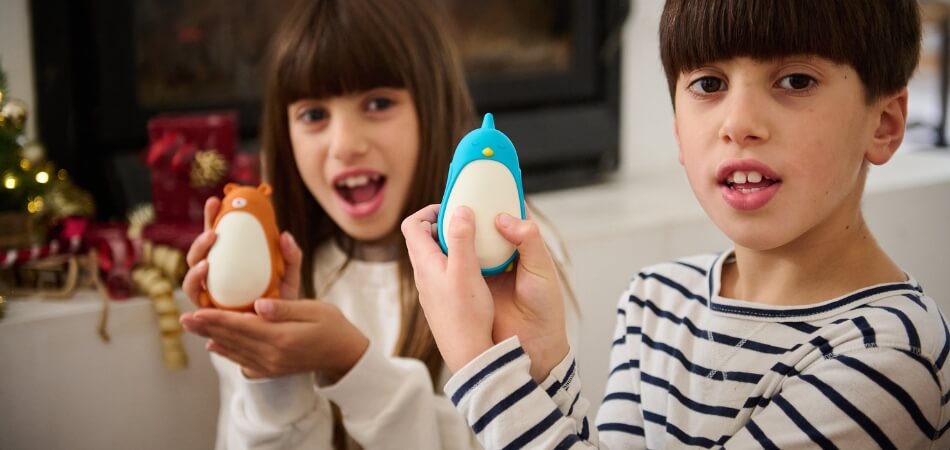
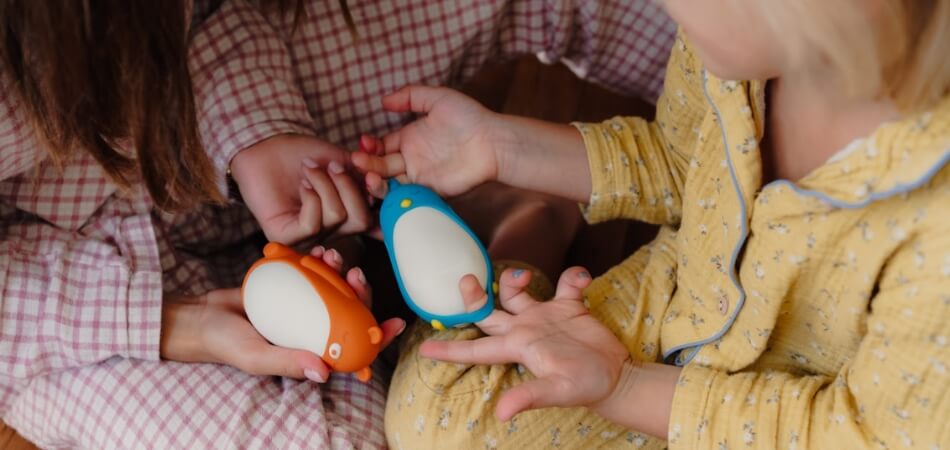
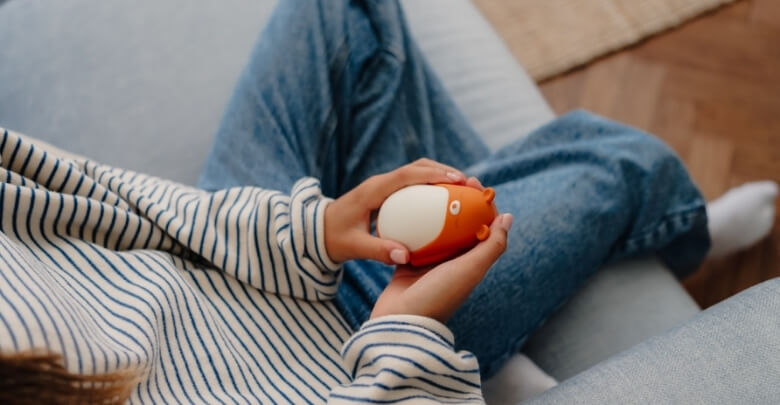
Moonbuddy includes soft character sleeves such as Barry the Bear and Bibi the Bird, along with a lightweight 88-gram design that fits comfortably in small hands.
That child-friendly design matters because kids are more likely to accept something that feels like a companion rather than a tool.
My child didn’t act like Moonbuddy was a device they had to “use correctly.” They treated it like a little buddy they could hold.
That emotional connection helped.
One-Button Use
I didn’t have to open an app, adjust settings, connect Bluetooth, or explain a long process.
One button was enough.
That made Moonbuddy easy to use even when everyone was tired.
Automatic Four-Minute Sessions
The automatic session length was another practical feature.
Four minutes felt long enough to slow things down but short enough that my child didn’t get bored. I also liked that it stopped on its own, so I didn’t have to manage the timing.
Multiple Breathing Modes
Moonbuddy includes four preset breathing modes.
I liked this because not every child or every moment needs the same breathing pace. A slower rhythm may work better at bedtime, while a gentler pattern may be better when a child is restless or just getting used to the device.
Rechargeable Battery and USB-C Charging
Moonbuddy uses a rechargeable battery and USB-C charging, which makes daily use easier. One full charge supports multiple sessions.
That was important because I did not want another product that constantly needed disposable batteries.
Real-Life Benefits I Noticed
The biggest real-life benefits I noticed with Moonbuddy were calmer bedtime transitions, less screen dependence, easier breathing practice, and a more peaceful way for my child to settle down. It did not create perfect nights, but it helped make bedtime feel more manageable.
After using Moonbuddy for 30 days, I started thinking less about the device itself and more about the changes it created in our evening routine.
That is usually how I know a product has practical value.
Bedtime Felt Less Like a Battle
Before Moonbuddy, bedtime often felt like a tug-of-war.
I wanted my child to sleep.
My child wanted comfort, reassurance, control, and more time.
Both of us were tired.
That combination can turn even small requests into big moments.
Moonbuddy helped soften that transition.
Instead of saying, “You need to calm down,” I could say, “Let’s breathe with Moonbuddy for a minute.”
That felt less confrontational.
My Child Had an Easier Time Understanding Breathing
Before Moonbuddy, breathing exercises were hit or miss.
Sometimes my child would breathe too fast. Sometimes they would exaggerate the breath and get silly. Sometimes they would say, “I don’t know how.”
Moonbuddy made breathing more concrete.
The gentle movement showed the pace. My child did not have to guess. They could feel the rhythm and copy it.
That made guided breathing much easier to practice.
It Reduced Screen Dependence at Night
I did not want our bedtime routine to depend on a phone, tablet, or video. Screens had become too easy to lean on, especially when everyone was tired.
Moonbuddy gave us a calming alternative.
It helped replace that “can I watch something?” moment with something quieter and more intentional.
It Encouraged Independence
One of the most encouraging things I noticed was that my child began using Moonbuddy with less help from me.
At first, I guided the breathing.
Then we breathed together.
Eventually, they could hold it and follow along on their own.
That felt like progress.
Not because I wanted to rush independence, but because self-soothing is a skill. Moonbuddy gave my child a gentle way to practice it.
Who Should Use Moonbuddy?
Moonbuddy is best for children who struggle to wind down, feel restless at bedtime, get overstimulated after busy days, or need help practicing calm breathing. It may also be useful for parents who want a screen-free, drug-free relaxation tool that fits easily into a nightly routine.
I don’t think every family needs Moonbuddy.
Some kids fall asleep easily. Some bedtime routines are already peaceful. Some children naturally transition from daytime energy to nighttime rest without much help.
But if bedtime in your home often feels tense, emotional, or unpredictable, Moonbuddy may be worth considering.
Moonbuddy may be a good fit for:
- Parents whose kids struggle to wind down
- Children who need help with big feelings
- Families trying to reduce screens before bed
- Kids who respond well to tactile comfort
- Parents who want a simple relaxation tool
- Children who get overstimulated easily
- Kids learning self-regulation
- Families looking for a drug-free option
- Parents who travel often with children
If your child often says things like “I can’t sleep,” “I’m scared,” “My body won’t calm down,” or “I need you to stay,” Moonbuddy may be worth trying.
It gives them a tool. And sometimes, giving a child a tool works better than giving them another instruction.
Who Moonbuddy May Not Be For
Moonbuddy may not be for families expecting an instant sleep cure, children who dislike holding calming objects, or parents who want a high-tech sleep tracker with apps, analytics, and audio features. It works best as a gentle breathing support tool, not a guaranteed solution for every sleep issue.
As much as I liked Moonbuddy during my 30-day test, I do not want to make it sound like the perfect product for every child.
Moonbuddy may not be ideal for:
- Parents expecting overnight miracles
- Children with serious sleep or anxiety concerns that require professional care
- Kids who strongly dislike guided breathing
- Families looking for a high-tech sleep gadget
- Children who already sleep peacefully
- Parents who won’t use it consistently
- Kids who prefer audio stories, music, or white noise
Moonbuddy is a relaxation support tool. It is not a medical treatment. If your child has chronic insomnia, severe anxiety, panic symptoms, trauma-related sleep problems, breathing concerns, or ongoing nighttime distress, talk with a pediatrician or qualified healthcare professional.
Moonbuddy Pros and Cons
Moonbuddy’s biggest pros are its screen-free design, gentle breathing guidance, child-friendly simplicity, and ability to support a calmer bedtime routine. The main cons are that it is not an instant sleep fix, requires consistent use, and may not appeal to every child.
Pros
- Screen-free design keeps bedtime calmer and avoids unnecessary stimulation.
- One-button operation makes it easy for children to use.
- Gentle breathing movement helps kids understand slow breathing.
- Soft, friendly look helps children accept it more naturally.
- Automatic session timing keeps use simple and consistent.
- Rechargeable battery removes the need for disposable batteries.
- Portable design makes it useful at home or while traveling.
- Drug-free approach supports relaxation without supplements or medication.
- Encourages self-regulation by giving kids a breathing tool they can practice with.
Cons
- It is not an instant sleep solution.
- It works better with consistency.
- Some kids may treat it like a toy at first.
- It focuses only on breathing guidance, so it does not include music, stories, or sleep tracking.
- It should not replace professional help for serious sleep or anxiety concerns.
For me, the pros outweighed the cons.
Moonbuddy is not perfect, but it does what I wanted it to do: it helps create a calmer bedtime moment and gives my child a simple way to practice breathing.
Moonbuddy Pricing, Discounts, and Where to Buy
Moonbuddy is sold through the official website with multiple package options, including a single-unit option and discounted bundles for families who want more than one. At the time of this review, pricing started at $89.99, with bundle deals, free shipping on select packages, and a 30-day money-back guarantee.
Price matters, especially when you are buying something for your child’s bedtime routine.
Moonbuddy pricing is listed as follows:
| Package | Listed Price | Best For |
| 1 Moonbuddy | $89.99 | Parents trying one for one child |
| Buy 1, Get 1 at 50% Off | $149.99 | Two kids or one for home and one for travel |
| Buy 2, Get 1 Free | $199.98 | Larger families or gift buyers |
The single Moonbuddy option is the simplest choice if you are testing it for one child.
The buy-one-get-one-50%-off package seems like the better value if you have two children, want a backup, or want one for home and one for travel.
The buy-two-get-one-free option is the biggest package and may make sense for larger families or parents who want to buy one as a gift.
Where Should You Buy Moonbuddy?
The safest place to buy Moonbuddy is the official website.
That is where you are more likely to get the authentic product, current discounts, bundle pricing, customer support, guarantee access, and any available free shipping offers.
For a product meant for children, I would be careful with random third-party listings. Even if a marketplace listing looks cheaper, it may not include the same guarantee, support, or official product assurance.
Is Moonbuddy Legit or a Scam?
Based on my research and hands-on testing, Moonbuddy appears to be a legitimate calming breathing companion for children, not a random gimmick or scam. It has a clear purpose, practical bedtime use, listed package pricing, and a 30-day money-back guarantee.
After testing Moonbuddy, I do not see it as one of those overhyped internet gadgets that sound good but have no real use.
It has a simple function, and that function makes sense.
Kids often struggle to understand slow breathing. Moonbuddy gives them a physical breathing rhythm they can follow. That is a practical idea, especially for bedtime routines, emotional wind-downs, and screen-free relaxation.
So based on my experience, I would say Moonbuddy is legit.
But I also think buyers should keep realistic expectations.
Moonbuddy is not a medical treatment, instant sleep cure, or guaranteed fix for every child. It is a calming breathing tool that may help support relaxation when used consistently.
That difference matters.
Moonbuddy vs. Other Sleep and Relaxation Tools
Moonbuddy is different from many sleep and relaxation tools because it uses tactile guided breathing instead of screens, sounds, apps, supplements, or lights. It is best for families who want a simple, child-friendly calming device that supports relaxation without overstimulating bedtime.
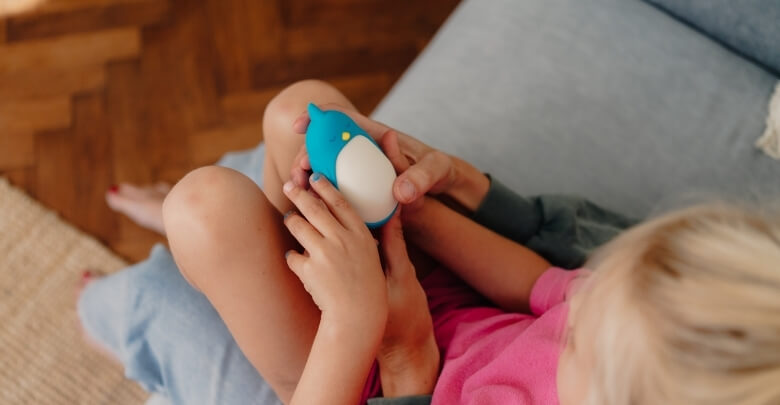
Before Moonbuddy, I had tried enough bedtime solutions to know that not every “calming” product actually makes bedtime calmer.
Moonbuddy vs. Meditation Apps
Meditation apps can be helpful, especially for adults or older kids who enjoy audio guidance.
But for younger children, apps can be tricky. They require a phone or tablet nearby, which can make bedtime more tempting instead of calmer.
Moonbuddy felt better for our family because it was screen-free and physical.
Moonbuddy vs. White Noise Machines
White noise machines can be great for blocking background sounds and creating a consistent sleep environment.
But white noise is passive. It creates background comfort, but it does not teach a child what to do when their body feels restless.
Moonbuddy is more active. It gives children a breathing pattern to follow.
Moonbuddy vs. Night Lights
Night lights can help children who feel afraid of the dark.
But night lights do not necessarily help with racing thoughts, restless energy, or emotional overwhelm.
Moonbuddy serves a different purpose. It helps guide breathing and creates a quiet, calming ritual.
Moonbuddy vs. Stuffed Animals
Stuffed animals are classic bedtime comfort objects, and I would never argue against them.
But Moonbuddy adds something a regular plush toy does not: a breathing rhythm.
That gentle movement made it more interactive and purposeful.
Moonbuddy vs. Sleep Supplements
Some parents consider sleep supplements when bedtime becomes difficult.
I understand the temptation, especially after several rough nights. But I personally wanted to try a drug-free option first for everyday restlessness.
Moonbuddy does not involve anything your child has to swallow. It simply supports relaxation through breathing.
For supplement questions or chronic sleep concerns, it is best to speak with a pediatrician.
Is Moonbuddy Worth It? My Final Verdict
Moonbuddy may be worth it for parents who want a simple, screen-free, drug-free way to help children practice calming breathing before bed. It is not a miracle sleep cure, but during my 30-day test, it made bedtime feel calmer and less emotionally exhausting.
After a full month of using Moonbuddy, my verdict is simple:
I would keep using it.
Not because it made every night perfect. It didn’t.
Not because my child suddenly fell asleep instantly. That didn’t happen either.
I would keep using Moonbuddy because it gave us something practical, gentle, and repeatable at the exact point in the day when our family needed more calm.
That is where I think the real value is.
My Final Rating
Based on my hands-on experience, I would give Moonbuddy:
4.6 out of 5 stars
Here’s why:
- Ease of use: 5/5
- Child-friendliness: 5/5
- Screen-free value: 5/5
- Bedtime routine support: 4.7/5
- Instant sleep results: 3.8/5
- Overall value: 4.6/5
The only reason I would not give it a perfect score is that it requires consistency and may not work the same way for every child.
But as a calming bedtime tool, I think Moonbuddy does its job well.
Frequently Asked Questions About Moonbuddy
Finding calming tools that don’t rely on screens can be challenging for parents. That’s why we’ve gathered answers to the most common questions about Moonbuddy, including how it works, who it’s designed for, safety, bedtime use, and what you can realistically expect from daily use.
Is Moonbuddy safe for kids?
Moonbuddy is designed as a child-friendly relaxation tool, but parents should always follow the manufacturer’s instructions and supervise use when appropriate, especially with younger children. It is not a medical device or treatment.
Can Moonbuddy help with stress or anxiety?
Moonbuddy may help support relaxation by guiding slow breathing, which can be useful when a child feels restless, nervous, or overstimulated. However, Moonbuddy should not be described as a cure for anxiety or any medical condition.
Does Moonbuddy help children sleep better?
Moonbuddy may help children settle into a calmer bedtime routine, which can make it easier for some kids to fall asleep. It does not force sleep or guarantee instant results.
Is Moonbuddy drug-free?
Yes. Moonbuddy is a drug-free relaxation tool. It does not rely on medication, supplements, melatonin, or anything a child has to swallow.
How long should my child use Moonbuddy each night?
Moonbuddy sessions are listed as four minutes long and turn off automatically. In my experience, it worked best after stories, with the lights low, before my child was already upset or overtired.
Is Moonbuddy portable?
Yes, Moonbuddy is portable enough to use at home or bring along during travel, overnight visits, sleepovers, or vacations.
Does Moonbuddy make noise?
Moonbuddy works quietly and does not play music or sounds. It guides breathing through movement rather than audio.
Can Moonbuddy be shared between siblings?
Yes, Moonbuddy can be shared if siblings are comfortable doing so. However, if two children both want to use it at bedtime, buying more than one may prevent arguments.
Final Thoughts: Should You Buy Moonbuddy Today?
You should consider buying Moonbuddy today if your child struggles to relax before bed and you want a simple, screen-free, drug-free breathing companion that supports a calmer nighttime routine. It is best for families who value gentle consistency over quick-fix sleep promises.
After testing Moonbuddy for 30 days, I can honestly say it surprised me.
Not in a flashy, dramatic, “my child slept perfectly forever” kind of way.
It surprised me because it made one of the most stressful parts of our day feel a little softer.
And sometimes, that is exactly what a good parenting product should do.
Moonbuddy gave my child a calming rhythm they could hold. It gave me a better way to support them without repeating the same bedtime instructions over and over. It helped us move away from screens, reduce tension, and create a quieter transition into sleep.
That made it valuable in our home.
I recommend Moonbuddy if you are a parent who feels like bedtime has become too tense, too screen-dependent, or too emotionally draining.
I would not buy Moonbuddy expecting a guaranteed sleep miracle. That is not realistic.
But I would consider it if you want a practical tool that can help your child practice slow breathing and feel more settled before sleep.
Moonbuddy is not about forcing sleep.
It is about helping children feel calm enough to let sleep happen more naturally.
That distinction matters.
Moonbuddy is a small breathing companion made to help children slow down and relax when their minds feel busy. It is not a toy with lights or sounds, and it does not need a phone, app, or screen to work.
- Screen-free design
- One-button operation
- Soft, friendly look helps kids accept it
- Automatic session timing
- It focuses only on breathing guidance
