
Yes, a top sheet is still useful in bed if you want cleaner bedding, easier laundry, better temperature control, and a more polished sleep setup. It sits between your body and your blanket, comforter, quilt, or duvet, creating a soft washable layer that helps protect your heavier bedding from sweat, body oils, dirt, and daily use.
That said, a top sheet is not required for everyone. Some people love the extra layer because it feels clean and cozy. Others skip it because it bunches up, adds more laundry, or feels unnecessary with a washable duvet cover. The best choice depends on how you sleep, how warm you get at night, how often you wash your bedding, and whether you prefer a traditional or minimalist bed.
If you have ever wondered, “Do you really need a top sheet in bed?”, the simple answer is this: you do not absolutely need one, but it can make your bed easier to keep fresh and more comfortable if it fits your sleeping style.
What Is a Top Sheet?
A top sheet, also known as a flat sheet, is the sheet placed over your body and under your blanket, comforter, quilt, or duvet. It is different from a fitted sheet, which wraps around the mattress.
A standard bedding setup usually includes:
| Bedding Item | Main Purpose |
| Fitted sheet | Covers and protects the mattress |
| Top sheet | Creates a washable layer over your body |
| Blanket or comforter | Adds warmth and weight |
| Duvet cover | Protects the duvet insert |
| Quilt or coverlet | Adds light warmth and style |
The top sheet’s main job is to act as a barrier layer. Instead of your comforter or blanket touching your skin directly every night, the top sheet catches sweat, skin oils, dust, and other buildup. Since a flat sheet is easier to wash than thick bedding, it can help keep your bed cleaner with less effort.
Main Benefits of Using a Top Sheet
A top sheet may seem like a small piece of bedding, but it can make a noticeable difference in comfort, hygiene, and daily bed-making. Here are the biggest reasons many people still use one.
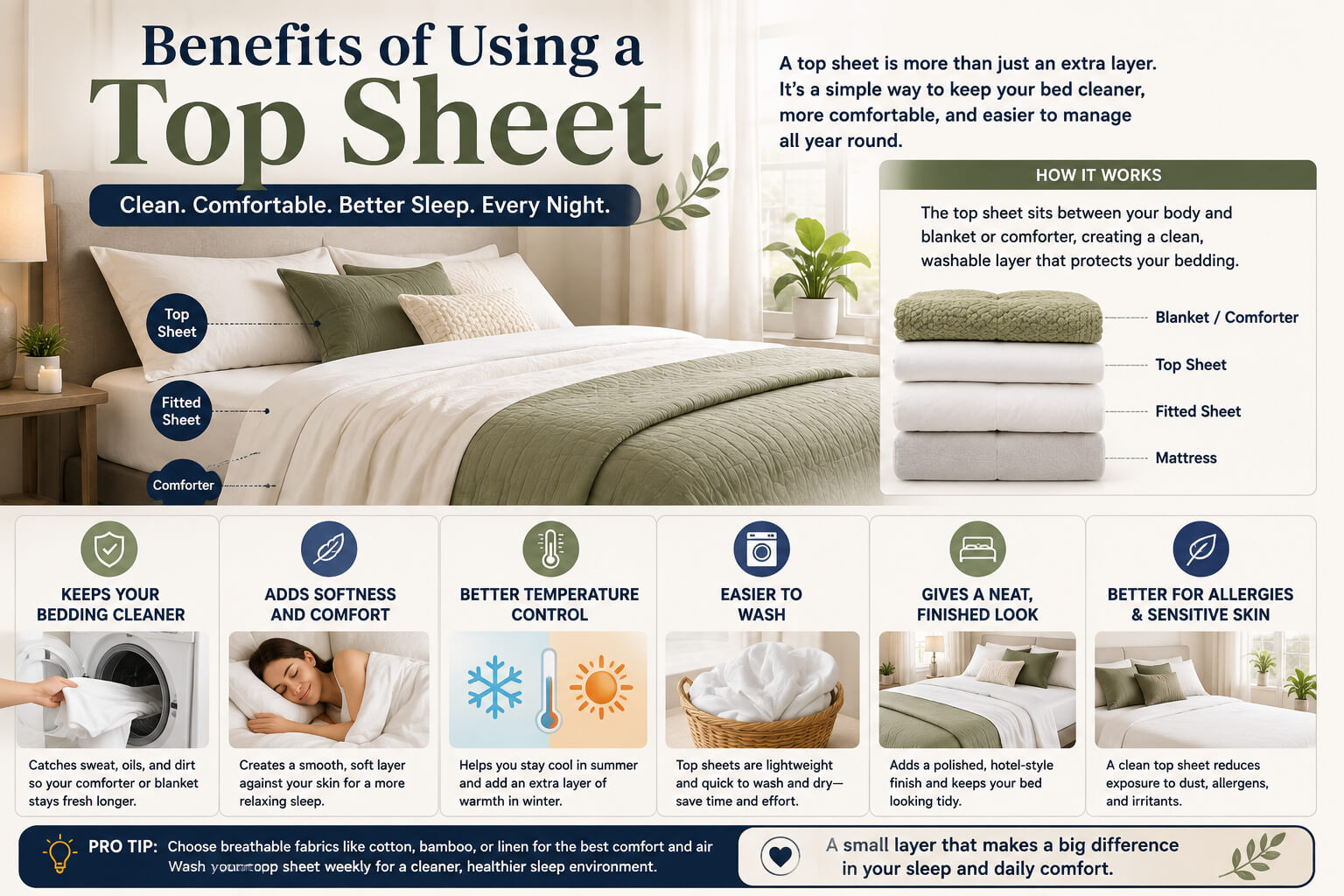
It Helps Keep Your Comforter Cleaner
The biggest benefit of a top sheet is cleanliness. While you sleep, your body naturally releases sweat and oils. Your skin also sheds tiny particles, and if you use lotion, hair products, or body oil before bed, those can transfer to your bedding as well.
Without a top sheet, all of that goes directly onto your comforter, blanket, or duvet cover. With a top sheet, the layer closest to your body is much easier to wash.
This is especially helpful if:
- Your comforter is bulky
- Your blanket takes a long time to dry
- Your duvet insert is not machine washable
- You do not want to wash heavy bedding every week
- You sleep with pets or kids on the bed
A top sheet does not mean you never need to wash your comforter, but it can help keep it fresher between washes.
It Adds a Soft Layer Against Your Skin
A good top sheet can make your bed feel smoother and more comfortable. Instead of sleeping directly under a textured quilt, heavy comforter, or rough blanket, you get a soft layer between your body and the top bedding.
This is one reason many people prefer cotton, bamboo, or linen top sheets. These materials can feel breathable, smooth, and comfortable without adding too much weight.
If your comforter feels too heavy or your blanket feels scratchy, a top sheet can make the whole bed feel better.
It Gives You Better Temperature Control
A top sheet can help you adjust your comfort through the night. If you feel warm, you can push down the comforter and still keep the top sheet over you. If you feel cold, the sheet adds one extra layer under your blanket.
This makes it useful during seasonal changes. In spring or early fall, a top sheet may be enough on its own. In winter, it can work with a quilt, comforter, or blanket to create a warmer layered bed.
For hot sleepers, the right fabric matters. A breathable cotton percale, bamboo-derived fabric, or linen sheet usually feels cooler than thick microfiber or flannel.
It Makes Laundry Easier
Top sheets are much easier to wash than bulky bedding. Most flat sheets fit easily in a washing machine, dry faster, and can be cleaned more often without much trouble.
For many households, washing sheets once a week is realistic. Washing a comforter every week may not be. A top sheet helps solve that problem by giving you a lighter washable layer that handles most of the direct body contact.
This is one of the main reasons top sheets remain common in homes, guest rooms, and hotel-style bedding setups.
It Makes the Bed Look More Finished
A tucked top sheet can give your bed a cleaner, more organized look. When folded neatly over a blanket or comforter, it creates a polished edge near the pillows and helps the bed look more complete.
If you like a traditional, hotel-inspired, or layered bedding style, a top sheet fits naturally into that look. It can also add a small design detail if you choose a color, pattern, or texture that complements your comforter.
It Can Help With Allergies and Skin Comfort
A top sheet can help reduce direct contact with dust, pet dander, pollen, sweat, and skin oils. This can be useful for people with allergies, sensitive skin, or pets that sleep on the bed.
Of course, a top sheet is not a medical solution for allergies. But because it is easy to wash often, it can support a cleaner sleep surface and help your bedding feel fresher.
Reasons Some People Skip the Top Sheet
Even though a top sheet has clear benefits, it is not perfect for every sleeper. Some people avoid it because it does not match their comfort preferences or bedding routine.
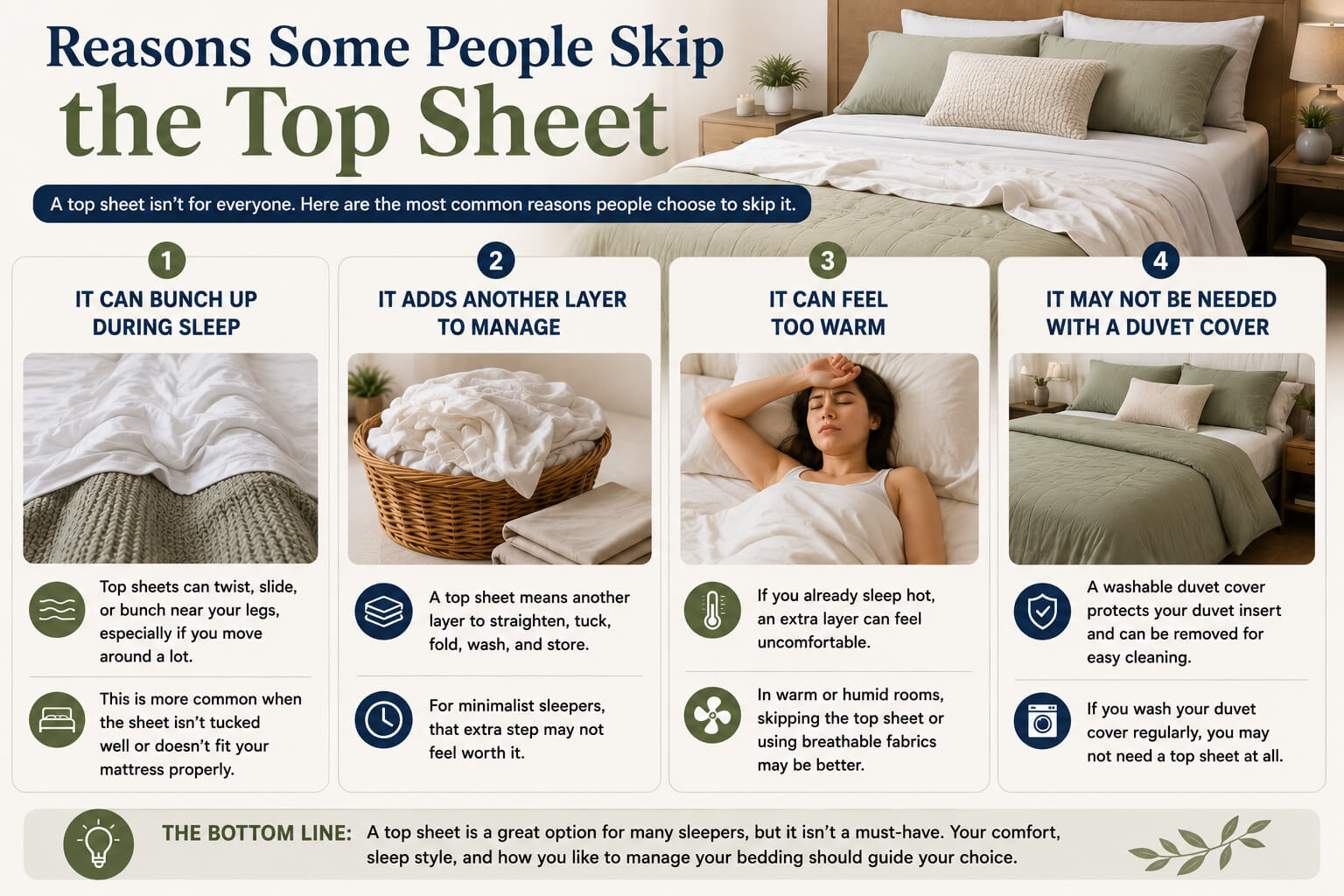
It Can Bunch Up During Sleep
One of the biggest complaints about top sheets is that they can twist, slide, or bunch near your legs. If you move around a lot while sleeping, loose fabric may feel annoying.
This is especially common when the sheet is not tucked properly or does not fit the mattress size well.
It Adds Another Layer to Manage
Some people want the simplest possible bed. A fitted sheet, pillows, and a duvet may be enough for them. Adding a top sheet means another layer to straighten, tuck, fold, wash, and store.
For minimalist sleepers, that extra step may not feel worth it.
It Can Feel Too Warm
If you already sleep hot, an extra layer may feel uncomfortable. Even a thin sheet can feel like too much if your room is warm or humid.
In that case, skipping the top sheet or choosing a very breathable fabric may be better.
It May Not Be Needed With a Duvet Cover
A washable duvet cover can do some of the same work as a top sheet. It protects the duvet insert and can be removed for cleaning.
If you wash your duvet cover regularly, you may not need a top sheet at all. This is one reason duvet-only bedding is popular with people who prefer a cleaner, simpler setup.
Top Sheet vs. Duvet Cover: Which Is Better?
A top sheet and a duvet cover both help protect bedding, but they are not the same.
| Feature | Top Sheet | Duvet Cover |
| Placement | Between your body and blanket | Around the duvet insert |
| Ease of washing | Very easy | Washable but harder to remove and put back |
| Best for | Traditional bedding and weekly washing | Minimalist duvet setups |
| Feel | Loose, light layer | Attached to the duvet |
| Main benefit | Keeps top bedding cleaner | Protects the duvet insert |
If you want bedding that is easy to wash every week, a top sheet is usually simpler. If you dislike loose layers and prefer fewer pieces, a duvet cover may be the better option.
Some people use both. This gives extra protection for the duvet and creates a more layered, hotel-style bed.
Who Should Use a Top Sheet?
A top sheet is a smart choice for many people, especially if cleanliness and easy washing matter to you.
You may want to use a top sheet if:
- You sweat while sleeping
- You do not wash your comforter often
- You sleep with pets
- You like a tucked-in bed
- You want a lighter cover for warm nights
- You have sensitive skin
- You want your comforter to last longer
- You like a traditional or hotel-style bed
- You want bedding that feels fresh more often
It is also helpful in guest rooms because it creates a clean layer that is easy to replace and wash between visitors.
Who May Not Need a Top Sheet?
A top sheet may not be necessary if your current bedding setup already works well.
You may be fine without one if:
- You use and regularly wash a duvet cover
- You dislike loose bedding
- You move a lot at night
- You sleep very hot
- You prefer fewer layers
- You want to make the bed faster
- You use washable blankets instead of bulky comforters
The goal is not to follow a rule. The goal is to build a bed that feels comfortable, clean, and easy for your lifestyle.
How to Keep a Top Sheet From Coming Loose
If you like the idea of a top sheet but hate how it moves around, the problem may be how it fits or how it is tucked. A few small changes can help it stay in place.
Choose the Right Sheet Size
Make sure your top sheet matches your mattress size. A full-size sheet on a queen bed or a queen sheet on a king bed will not give you enough fabric to tuck securely.
Also consider mattress height. If you have a thick mattress, pillow top, mattress topper, or adjustable base, you may need a larger sheet with enough length and width to stay tucked.
Tuck the Bottom Edge Firmly
The bottom edge of the top sheet should be tucked under the mattress. This helps prevent the sheet from sliding upward during the night.
Pull the sheet smooth before tucking it in. Avoid pulling it so tight that your feet feel trapped.
Use Hospital Corners
Hospital corners help create a clean, secure fold at the bottom corners of the bed. This method keeps the sheet flatter and more stable.
To make hospital corners:
- Lay the top sheet evenly on the bed.
- Tuck the bottom edge under the mattress.
- Lift the extra fabric on one side into a triangle shape.
- Tuck the hanging fabric under the mattress.
- Fold the triangle down smoothly.
- Repeat on the other side.
This gives the bed a crisp look and helps stop the sheet from shifting.
Keep the Sheet Centered
Before tucking, check that the sheet hangs evenly on both sides. If one side is longer, the sheet may pull unevenly while you sleep.
A centered sheet is more comfortable and easier to keep neat.
Use Sheet Straps or a Bed Scrunchie
If your top sheet keeps slipping, sheet straps or a Bed Scrunchie can help. These tools create tension around the sheet and help hold the fabric in place under the mattress.
This can be especially useful for adjustable beds, thick mattresses, restless sleepers, or bedding that tends to slide around.
Try Non-Slip Bedding Pads
Non-slip pads can add grip between your mattress and bedding. They are simple, hidden, and useful if your sheets slide because of smooth mattress fabric or silky bedding materials.
Best Top Sheet Fabrics for Comfort
The right fabric can make your top sheet feel cool, warm, crisp, smooth, or cozy. Here are the most common options.
Cotton Top Sheets
Cotton is one of the most popular choices because it is breathable, soft, and easy to wash. It works well for most sleepers and most seasons.
Cotton percale usually feels crisp and cool, while cotton sateen feels smoother and slightly heavier.
Bamboo Top Sheets
Bamboo-derived sheets are known for their soft and silky feel. They are often chosen by hot sleepers because they can feel cool and breathable.
They may also feel gentle on sensitive skin, but care instructions can vary, so it is always smart to follow the label.
Linen Top Sheets
Linen is breathable, durable, and relaxed in appearance. It may feel slightly textured at first, but it usually softens after washing.
Linen is a good option if you want an airy sheet that works well in warm weather and still looks stylish without needing to be perfectly smooth.
Microfiber Top Sheets
Microfiber is soft, affordable, and resistant to wrinkles. It can feel smooth and warm, which makes it comfortable for some sleepers.
However, microfiber is usually less breathable than cotton or linen, so it may not be the best option if you sleep hot.
Flannel Top Sheets
Flannel is best for cold weather. It feels warm, soft, and cozy because the fabric is brushed for extra softness.
If your bedroom gets cold in winter, flannel can make your bed feel more comfortable without needing a much heavier blanket.
Cotton-Polyester Blend Top Sheets
A cotton-polyester blend can be practical for everyday use. These sheets are often easy to care for, more wrinkle-resistant, and budget-friendly.
They may not feel as breathable as pure cotton, but they can be a good option for guest rooms, kids’ rooms, or low-maintenance bedding.
How to Choose the Right Top Sheet
Choosing the best top sheet depends on your sleep habits, room temperature, skin sensitivity, and preferred bed style.
Here is a simple guide:
| Sleep Need | Best Top Sheet Choice |
| Hot sleeper | Cotton percale, linen, or bamboo |
| Cold sleeper | Flannel or cotton sateen |
| Sensitive skin | Soft cotton, bamboo, or linen |
| Easy care | Cotton blend or microfiber |
| Hotel-style bed | Crisp cotton or percale |
| Cozy winter bed | Flannel or thicker cotton |
Also check the sheet size before buying. If your mattress is tall or has a topper, choose a top sheet with enough fabric to tuck under the mattress comfortably.
Color and design matter too. White, beige, gray, and soft neutral shades create a clean look. Patterns can add personality if your comforter or duvet is simple.
How Often Should You Wash a Top Sheet?
For most people, a top sheet should be washed once a week. Since it sits close to your body, it collects sweat, oils, dust, and skin particles.
You may need to wash it more often if:
- You sweat heavily at night
- You sleep with pets
- You have allergies
- You have been sick
- You use body lotion or oils before bed
- You eat snacks in bed
- Your room gets dusty quickly
To keep your top sheet in good shape, use mild detergent, avoid overloading the washer, and follow the fabric care label. Washing with very hot water too often may wear down some fabrics faster.
Top Sheet Alternatives
If you do not like using a traditional top sheet, there are other ways to keep your bed comfortable and clean.
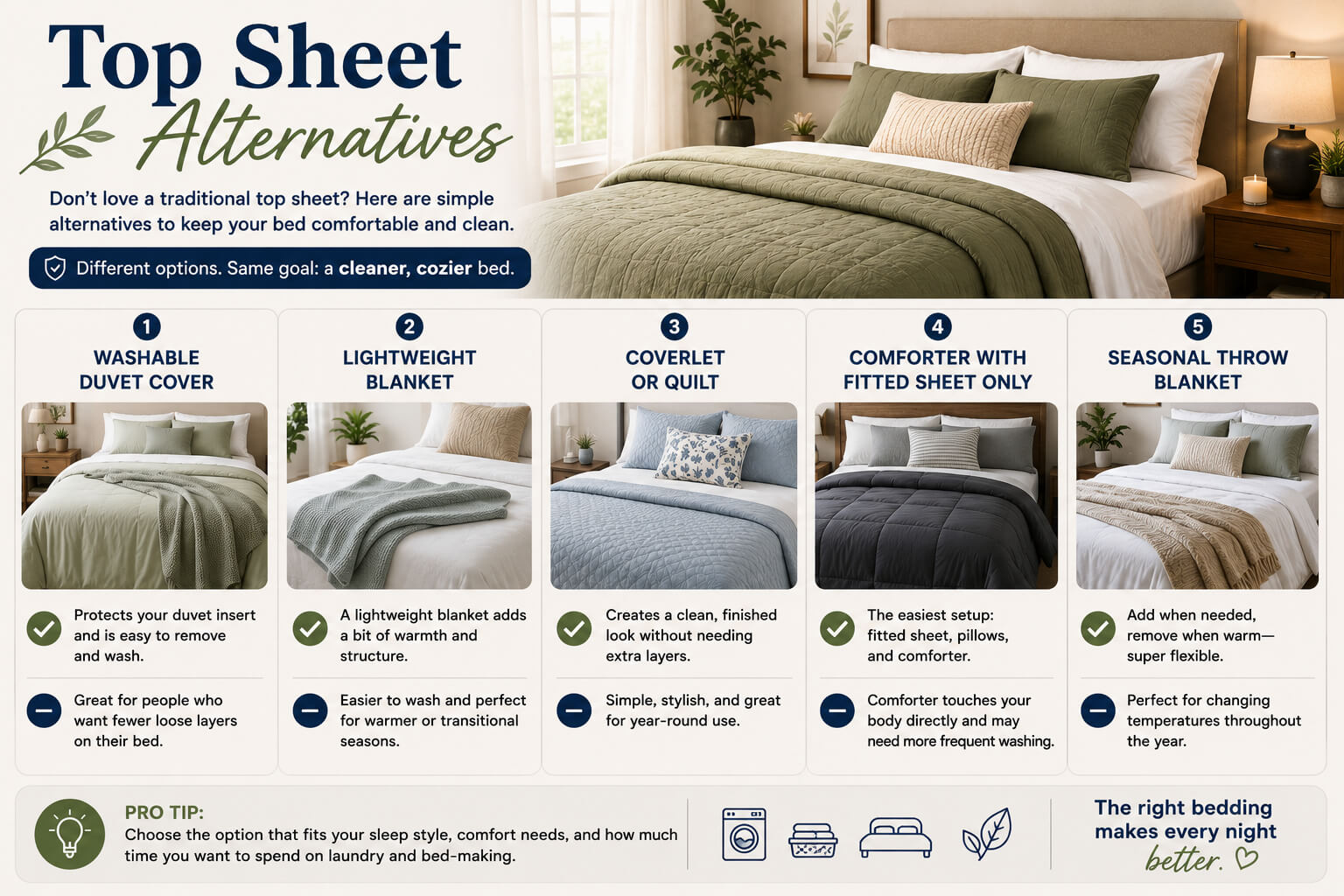
Washable Duvet Cover
A duvet cover is one of the most common alternatives. It protects the duvet insert and can be removed for washing. This setup works well if you prefer fewer loose layers.
Lightweight Blanket
A lightweight blanket can be used instead of a top sheet in warmer weather. It gives you a little more structure and warmth while still being easier to wash than a thick comforter.
Coverlet or Quilt
A coverlet or quilt can create a clean, finished look without needing a full layered bedding setup. It works well for people who want something simple but still stylish.
Comforter With Fitted Sheet Only
This is the easiest setup: fitted sheet, pillows, and comforter. It is quick to make and simple to manage. The downside is that the comforter will touch your body directly and may need more frequent washing.
Seasonal Throw Blanket
A throw blanket can be added when needed and removed when you feel warm. It is a flexible option for people whose sleep temperature changes throughout the year.
Minimalist vs. Traditional Bedding: Where Does the Top Sheet Fit?
A top sheet fits differently depending on your preferred bedding style.
| Bedding Style | How the Top Sheet Fits |
| Minimalist bedding | Often skipped for fewer layers |
| Traditional bedding | Used as a standard layer |
| Hotel-style bedding | Helps create a tucked, polished look |
| Duvet-only bedding | Usually replaced by a washable duvet cover |
| Seasonal bedding | Added or removed based on temperature |
If you like a simple bed that takes less time to make, you may prefer skipping the top sheet. If you like a layered bed that feels clean, tucked, and classic, the top sheet is probably worth keeping.
FAQs About Using a Top Sheet
Using a top sheet can improve bedding cleanliness, comfort, temperature control, and overall appearance, but it is not essential for every sleeper. The FAQs below answer common questions about sleeping without a top sheet, using one with a duvet cover, choosing the right fabric, preventing bunching, washing frequency, and deciding whether a top sheet suits your bedding routine.
Is it okay to sleep without a top sheet?
Yes, it is completely okay to sleep without a top sheet. Many people use a fitted sheet and duvet cover instead. The important thing is to wash whatever bedding touches your body regularly.
Do you need a top sheet with a duvet cover?
You do not always need a top sheet with a duvet cover. A washable duvet cover can act as the protective layer. However, some people still use both for extra cleanliness and comfort.
Does a top sheet make you hotter?
A top sheet can add a little warmth, but it can also help with temperature control. On warm nights, you can use the top sheet alone instead of a blanket. If you sleep hot, choose cotton percale, linen, or bamboo-derived fabric.
Can a top sheet replace a blanket?
A top sheet can replace a blanket in hot weather, but it may not be warm enough in cooler rooms. It works best as a light cover or as one layer under heavier bedding.
Should a top sheet be tucked in?
A top sheet does not have to be tucked in, but tucking the bottom edge helps keep it from moving around. If you prefer a looser feel, you can leave the sides untucked.
What is the best fabric for a top sheet?
Cotton is the best all-around choice for many sleepers because it is breathable, comfortable, and easy to wash. Linen and bamboo are great for hot sleepers, while flannel works best in cold weather.
How long does a top sheet last?
A good top sheet can last several years with proper care. Replace it when it becomes thin, rough, faded, torn, or uncomfortable.
Why do some people not use top sheets?
Some people skip top sheets because they bunch up, feel too warm, add extra laundry, or make bed-making more complicated. Others prefer using a washable duvet cover instead.
Final Verdict: Do You Really Need a Top Sheet in Bed?
You do not absolutely need a top sheet in bed, but it is a useful bedding layer for cleanliness, comfort, temperature control, and easier laundry. It helps protect your comforter, blanket, or duvet from direct contact with sweat, body oils, and dust. It also gives you a lighter cover option on warmer nights and can make your bed look more finished.
You should use a top sheet if you like a cleaner, traditional, and more layered bed. You may skip it if you prefer minimalist bedding, dislike loose fabric, or already use a washable duvet cover.
At the end of the day, the best bedding setup is the one that helps you sleep comfortably and keeps your bed easy to maintain. If a top sheet makes your bed feel fresher and cozier, it is worth using. If it makes your bed feel messy or uncomfortable, there is nothing wrong with leaving it out.
