
By midafternoon, my morning coffee often left me with a familiar choice: accept fading concentration or drink another cup and risk feeling overstimulated later.
I did not want to eliminate caffeine. I wanted energy that felt useful rather than abrupt.
That is why I tested Yerba Magic, a powdered yerba mate drink that combines caffeine with L-theanine, lion’s mane, prebiotics, and probiotics. During my test, the clearest change was steady energy. I did not feel a dramatic surge; instead, the effect felt more even while I worked.
That experience made the product interesting, but it did not prove every claim on the sales page. This Yerba Magic review separates my real experience from the formula’s advertised focus, digestive, appetite, and weight-related benefits so you can decide whether it fits your routine.
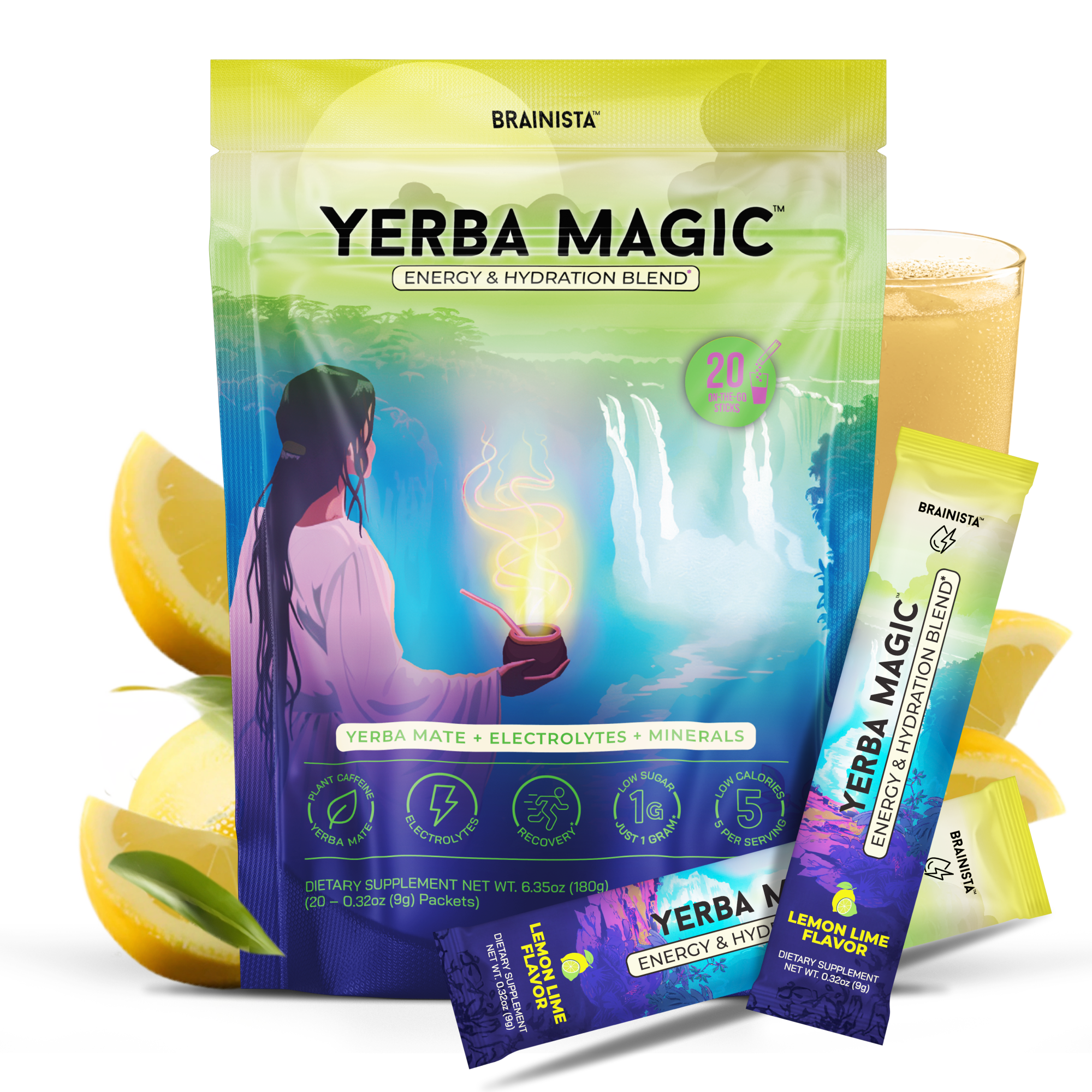
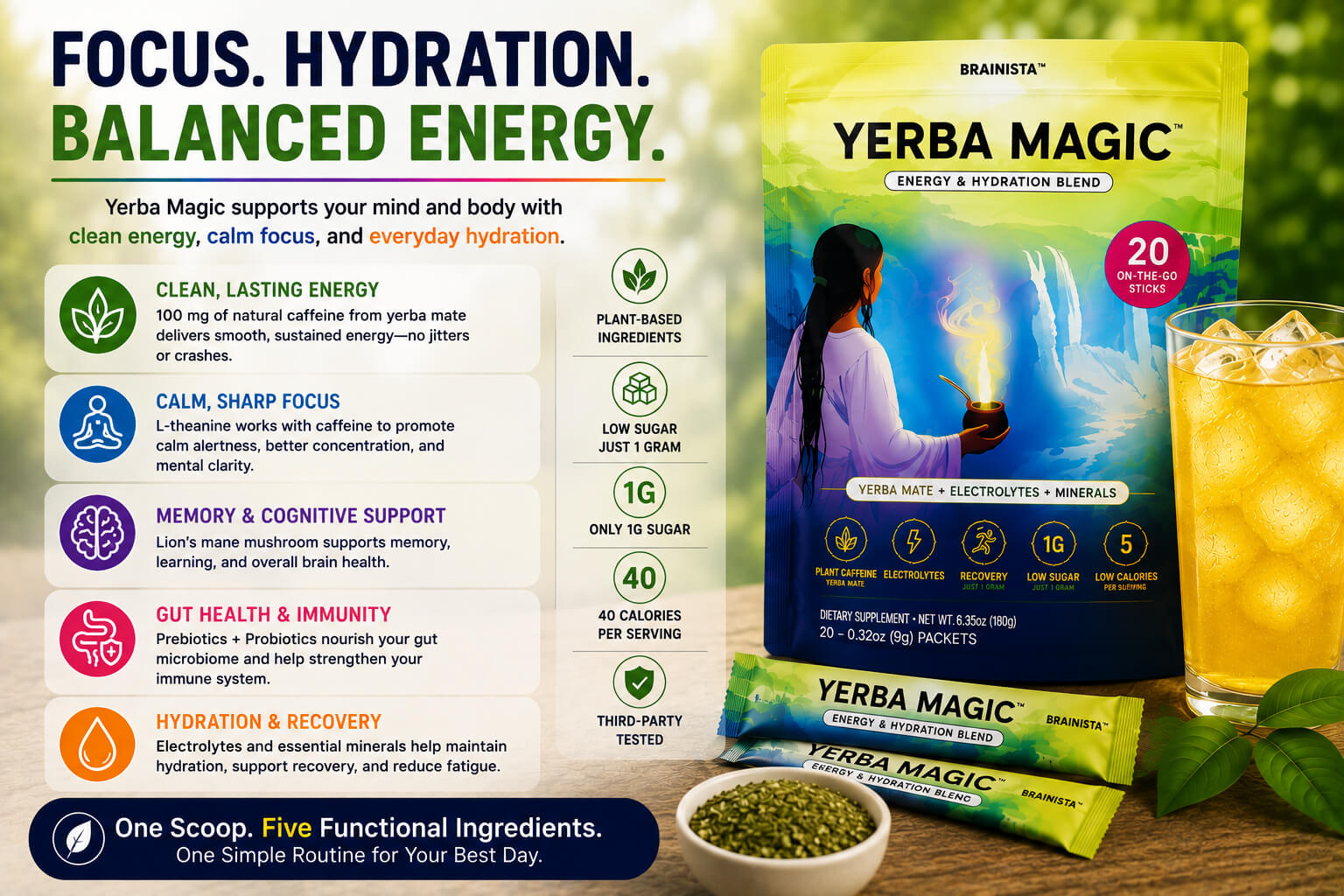
Yerba Magic combines 100 mg of caffeine from yerba mate with 100 mg of L-theanine, 1,000 mg of lion’s mane, and prebiotic and probiotic ingredients. During my test, it delivered steady, usable energy with an easy-to-mix fruit flavor. Its main drawbacks are the premium price and possible digestive discomfort for sensitive users.
- Provided steady energy during my test
- Clearly lists 100 mg of caffeine per serving
- Pairs caffeine with 100 mg of L-theanine
- Includes 1,000 mg of lion’s mane
- Contains prebiotic and probiotic ingredients
- Costs more than basic coffee or tea
- Sweetened flavor may not suit everyone
Quick Verdict
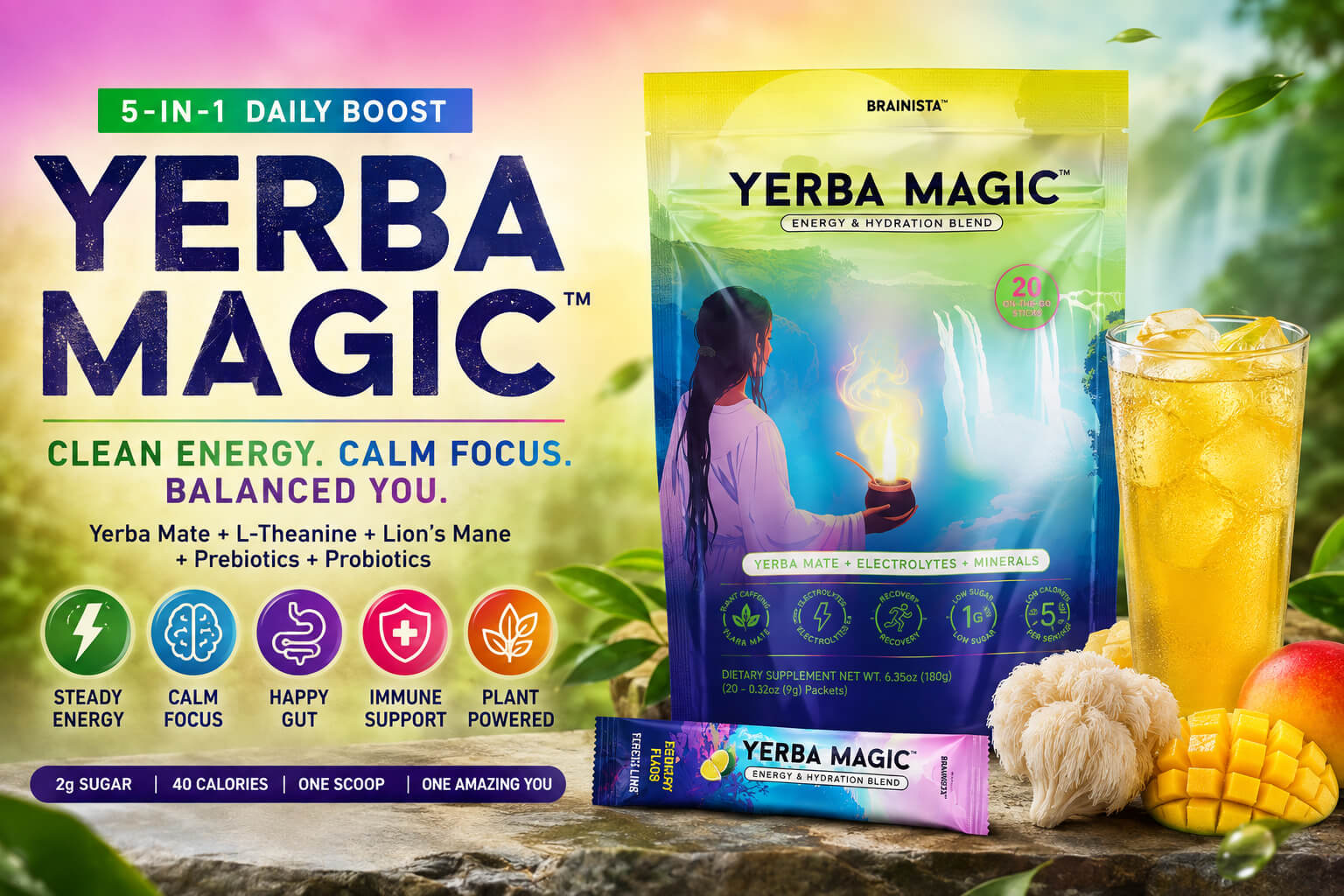
Yerba Magic is worth considering if you want a fruity coffee alternative that provides 100 mg of caffeine with L-theanine and added functional ingredients. During my multiweek test, I noticed steady energy rather than a sharp burst. However, digestive, appetite, focus, and weight-loss results are not guaranteed. Caffeine-sensitive users and buyers who dislike stevia or inulin may prefer another option.
Best for
- Adults who want a cold, fruit-flavored alternative to coffee
- Buyers seeking a clearly stated 100 mg caffeine dose
- People interested in caffeine paired with 100 mg of L-theanine
- Busy users who value quick preparation
- Anyone replacing a more expensive café or canned energy drink
Consider skipping it if
- You are highly sensitive to caffeine
- You dislike sweetened powdered drinks
- Inulin, probiotics, allulose, or stevia upset your stomach
- You only want the cheapest source of caffeine
- You expect guaranteed appetite suppression or weight loss
What Is Yerba Magic?
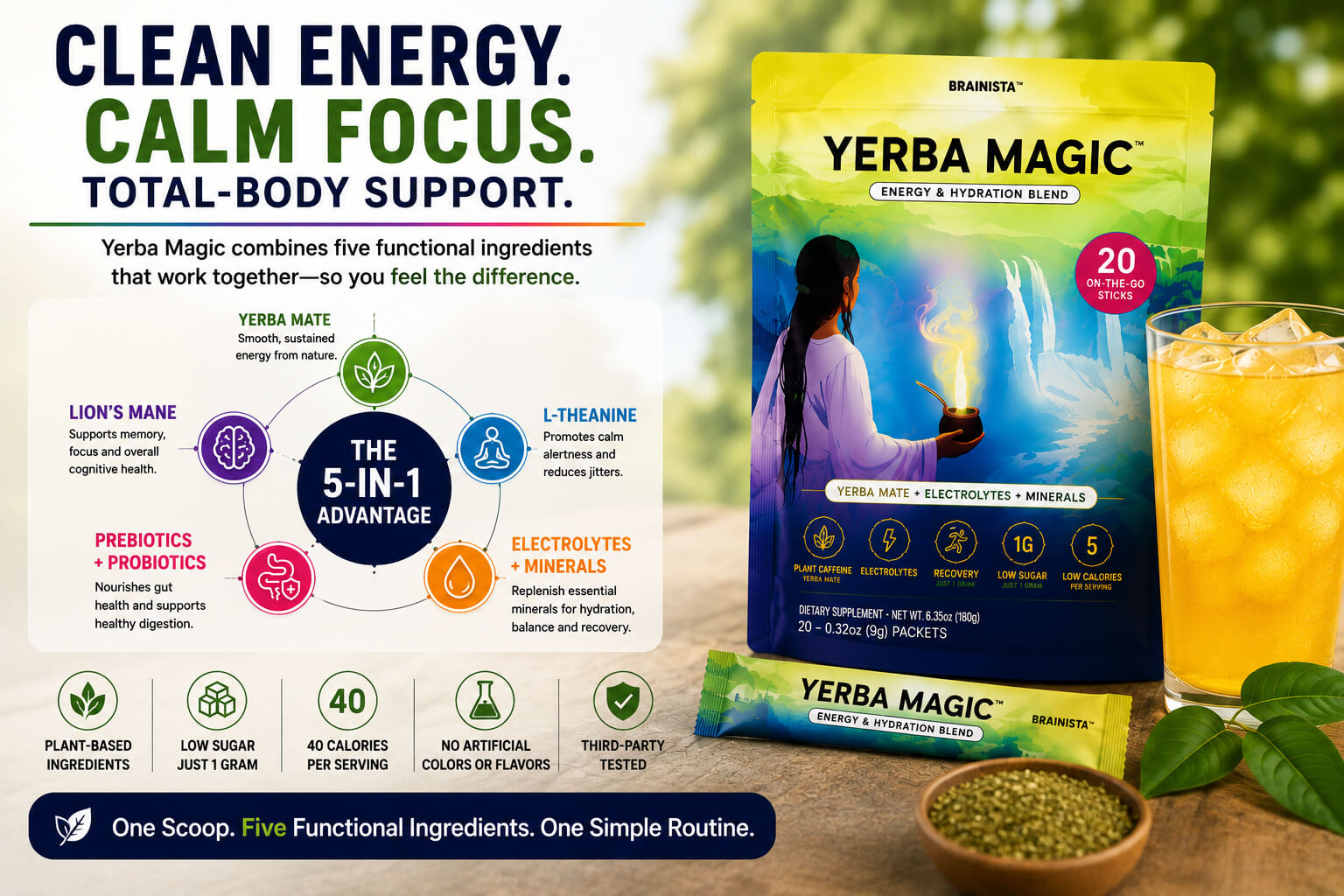
Yerba Magic is an instant 5-in-1 yerba mate drink powder designed to provide caffeinated energy while adding focus- and digestive-support ingredients. One scoop mixes with water, so it requires no coffee maker, tea bag, steeping time, gourd, or filtered straw.
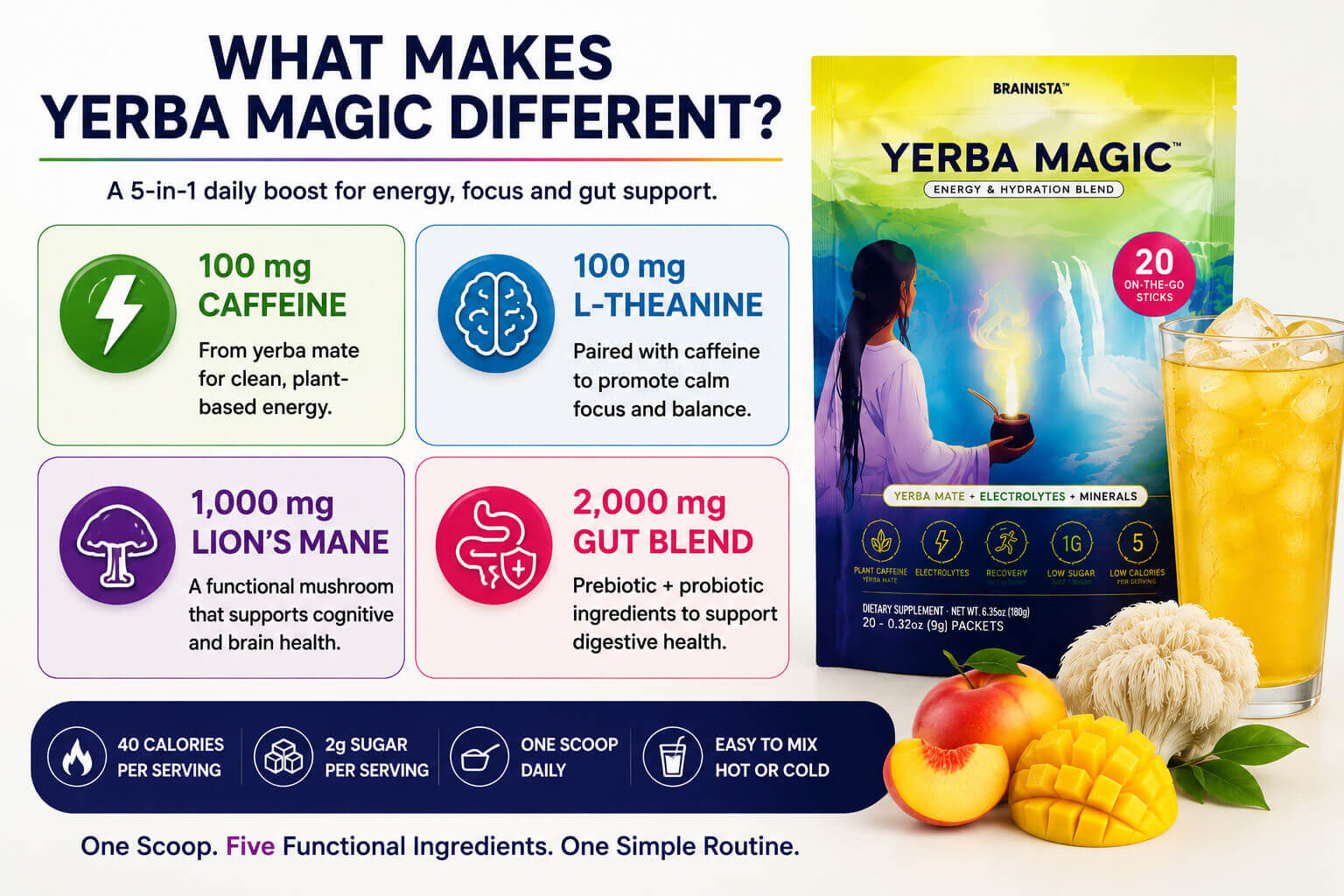
The company describes it as a five-part formula built around:
- Yerba mate extract for plant-based caffeine
- L-theanine to complement the stimulant effect
- Lion’s mane mushroom for cognitive-support positioning
- Prebiotic fibers that feed certain gut microorganisms
- Probiotics intended to support digestive balance
This is a more accurate way to understand “5-in-1” than treating it as five guaranteed outcomes. The label confirms that the ingredient categories are included, but it does not prove that every user will experience better concentration, digestion, mood, appetite control, or weight loss.
The current standard pouch contains 30 servings and is offered in Peach Mango, Strawberry Matcha, and Piña Colada. The product page lists it as produced in the United States and made with Argentine yerba mate.
Ingredients and Specifications
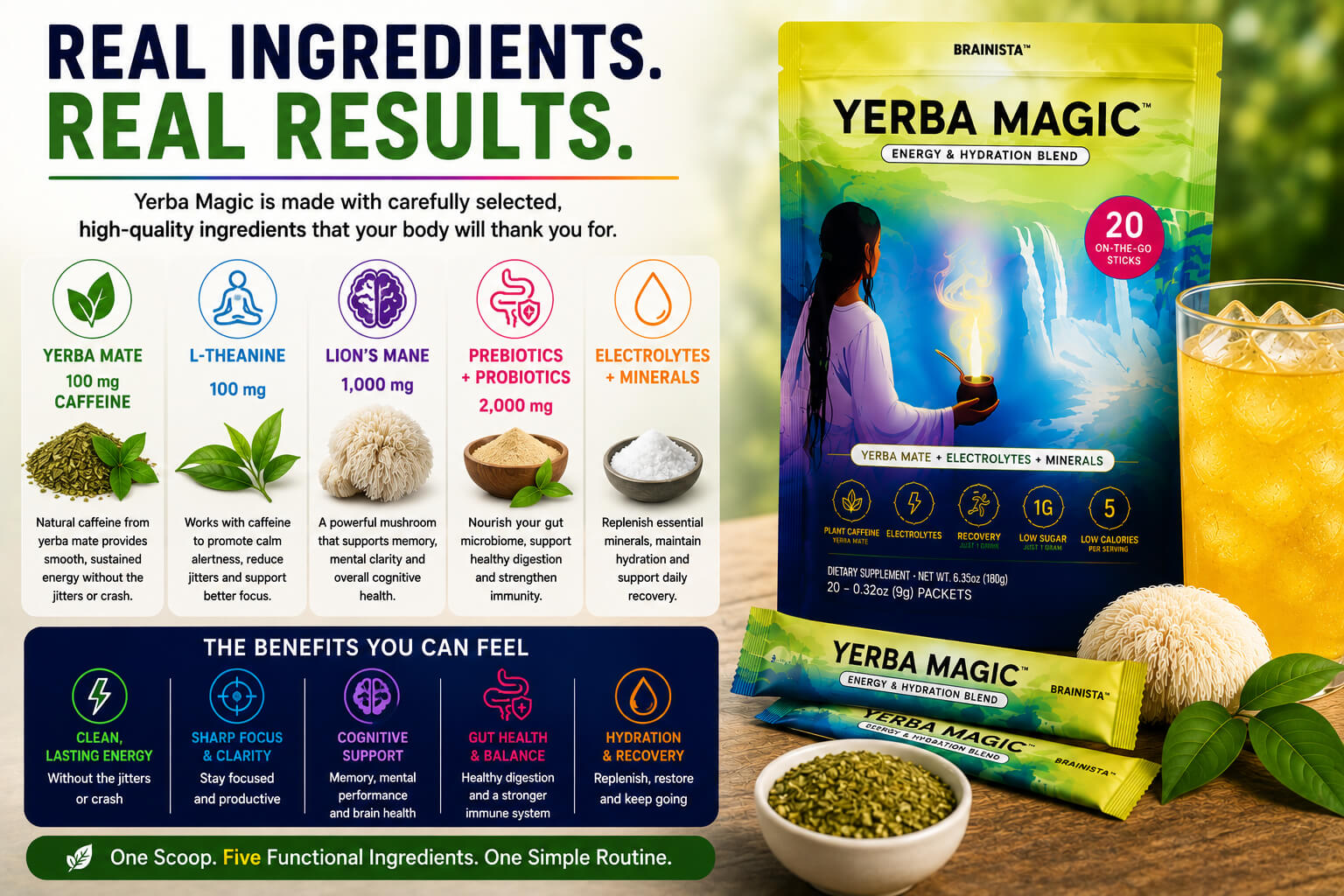
The formula is reasonably transparent about its main ingredient amounts, although several quality details remain undisclosed. The clearest label facts are the caffeine, L-theanine, lion’s mane, fiber-blend, calorie, and sugar amounts.
| Product detail | Amount or description |
| Product type | Instant yerba mate powder |
| Serving size | 1 scoop |
| Servings per pouch | 30 |
| Calories | 40 |
| Total carbohydrates | 9 g |
| Dietary fiber | 2 g |
| Total sugar | 2 g |
| Caffeine | 100 mg |
| L-theanine | 100 mg |
| Lion’s mane mushroom | 1,000 mg |
| Prebiotic and probiotic blend | 2,000 mg |
| Listed probiotics | 500 million CFU |
| Sweeteners | Allulose and stevia |
| Flavors | Peach Mango, Strawberry Matcha, Piña Colada |
The official page identifies the prebiotic fibers as chicory inulin, apple fiber, citrus pectin, and pea fiber. It describes the probiotic portion as Bacillus subtilis and Lactobacillus strains.
What the label does not fully explain
The disclosed amounts are helpful, but the current page does not clearly state:
- The lion’s mane extract ratio
- Beta-glucan content
- Whether the mushroom material is primarily fruiting body or mycelium
- Full probiotic strain-level identification
- Whether the listed CFU count is guaranteed through expiration
- A clearly linked current certificate of analysis for this exact powder
Those gaps do not establish that the formula is poor. They simply limit how confidently buyers can compare it with specialized mushroom or probiotic supplements.
The NIH notes that higher probiotic CFU counts alone do not necessarily produce greater benefits. The specific microorganisms, amounts, storage conditions, and potency through expiration all matter.
How Does Yerba Magic Work?
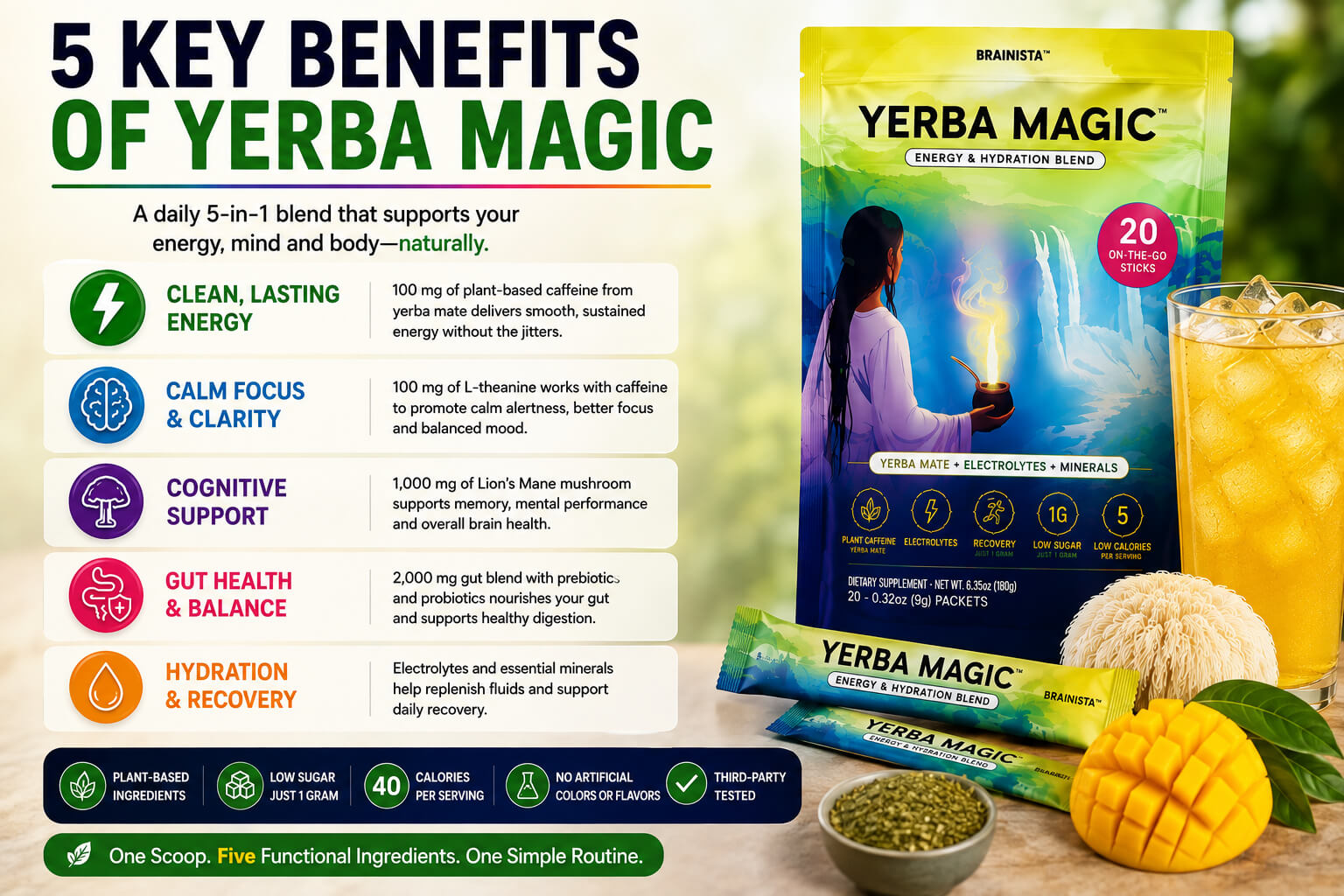
Yerba Magic works most predictably through its 100 mg of caffeine, while L-theanine, lion’s mane, prebiotics, and probiotics serve as supporting ingredients. The caffeine can create an immediate alertness effect; the remaining benefits are likely to be subtler and more individual.
Yerba mate supplies the main energy effect
One serving contains 100 mg of naturally sourced caffeine from yerba mate. For many adults, that is enough to reduce tiredness and improve alertness without reaching the very high stimulant levels found in some energy shots and pre-workout products.
Yerba mate is a plant source, but the body still handles its caffeine as caffeine. The FDA says naturally occurring and added caffeine do not differ in how the body handles them.
L-theanine complements the caffeine
Yerba Magic pairs the caffeine with an equal 100 mg of L-theanine. This amino acid is commonly combined with caffeine in focus-oriented products because it may support a calmer, more controlled experience than caffeine alone.
That pairing was one reason I was interested in the drink. During my own test, the effect felt steady rather than aggressively stimulating. I would not call it a dramatic mental transformation, but the energy was easier to use during ordinary work.
Lion’s mane adds a nootropic angle
The formula lists 1,000 mg of lion’s mane mushroom. The brand positions it around focus and mental clarity, but the quantity alone cannot establish product quality or predict a noticeable cognitive result.
Because the page does not clearly disclose the extraction details or beta-glucan content, I treat lion’s mane as an added feature—not the primary reason to expect the drink to work.
Prebiotics and probiotics support the digestive positioning
The prebiotic fibers are intended to feed certain microorganisms already living in the digestive tract. The probiotics add live microorganisms that may support the gut environment.
These ingredients make the drink broader than coffee, but they do not turn it into a targeted digestive treatment. The NIH explains that probiotic effects vary by strain, amount, duration, and the health outcome being studied.
My Experience After Testing Yerba Magic
The most noticeable result during my test was steady energy that felt more even than a sudden caffeine rush. I used Yerba Magic over a period of a few weeks and paid the most attention to how it affected my energy while working.
I was not expecting it to replace sleep or create perfect concentration. My practical question was whether it could help me get through mentally demanding parts of the day without making the experience feel overly intense.
The change I noticed was not a dramatic “kick.” Instead, the energy felt more level. That made it easier to continue working without feeling like I had taken an unusually strong stimulant.
I am intentionally not claiming results I did not clearly observe. My test does not prove that Yerba Magic:
- Improves digestion for everyone
- Prevents all caffeine crashes
- Reduces appetite
- Produces weight loss
- Improves memory
- Works the same way for every user
The steady-energy experience is also subjective. It may reflect the combination of caffeine and L-theanine, my normal caffeine tolerance, the timing of the serving, or several factors together.
Still, first-hand use changed my view of the product in one important way: I did not see it only as a label full of trendy ingredients. As a daily energy drink, it performed the basic job I wanted it to perform—providing usable, steady energy.
Does Yerba Magic Actually Work?
Yerba Magic worked for me as a steady-energy drink, but the evidence is much weaker for guaranteed digestive, appetite, cognitive, or weight-loss outcomes. Buyers should separate the predictable caffeine effect from the broader wellness claims.
| Claim or expected benefit | Realistic assessment |
| More energy | Reasonable from 100 mg caffeine; I noticed steady energy |
| Better alertness | Likely for many caffeine-responsive adults |
| Calmer focus | Possible; individual response varies |
| No jitters or crash | Not guaranteed |
| Better digestion | Possible but uncertain |
| Less bloating | Not established for every user |
| Reduced cravings | Uncertain |
| Weight loss | Not proven by this product |
| Better memory | Not established by the disclosed lion’s mane amount |
Energy is the clearest benefit
The caffeine amount is high enough to matter. For someone accustomed to a regular coffee, one serving may feel familiar. People with low caffeine tolerance could find it strong, while heavy caffeine users may consider it moderate.
My experience aligns with the product’s energy positioning, but I would phrase the benefit more carefully than the sales page. I noticed steady energy; I cannot promise that every buyer will experience “no crash” or “no jitters.”
Focus support is plausible but personal
Steadier energy can make it easier to remain on task, and I found the drink useful while working. However, that is different from proving that the lion’s mane or L-theanine improved my cognition.
Yerba Magic is not a treatment for attention disorders, memory problems, anxiety, or fatigue caused by chronic sleep loss.
Digestive benefits require realistic expectations
Some buyers may value the prebiotic and probiotic blend, but those effects can be difficult to judge. Diet, hydration, stress, medication, digestive health, and other supplements can all influence the outcome.
Probiotics can also cause gas in healthy people, and the NIH advises that they may create additional risks for people who are seriously ill or have weakened immune systems.
Weight loss should not be the main reason to buy
The product contains 40 calories and 2 grams of sugar, making it lighter than many sweet café drinks and full-sugar energy beverages. That can be useful when it replaces a higher-calorie habit.
However, Yerba Magic is not a prescription appetite suppressant, meal replacement, or proven “natural Ozempic.” The most credible weight-related benefit is substitution: replacing a more calorie-dense drink may help reduce intake. Adding Yerba Magic to an otherwise unchanged routine is unlikely to create meaningful weight loss by itself.
Taste, Sweetness, and Mixability
Yerba Magic is designed as a sweet, fruit-forward iced drink rather than an authentic bitter yerba mate experience. The product is sold in Peach Mango, Strawberry Matcha, and Piña Colada and is sweetened with allulose and stevia.
Taste is highly personal, so I would not use flavor alone as a universal reason to recommend it. Buyers who enjoy tropical drink powders or flavored iced teas are more likely to appreciate the concept than people who prefer black coffee, plain tea, or unsweetened mate.
The ingredients also make texture worth considering. Fiber, mushroom powder, and probiotics can behave differently from a basic instant beverage. Mixing thoroughly matters, and a small amount of settling would not be surprising.
What to expect from the flavors
- Peach Mango: likely the safest starting point for fruit-tea drinkers
- Strawberry Matcha: suited to buyers who enjoy berry sweetness with a greener note
- Piña Colada: intended for people who prefer pineapple-and-coconut-style flavors
The official page describes the taste as fruity with an earthy hint, while customer comments on the brand’s own site frequently praise the flavors. These are useful preference signals, but brand-hosted testimonials are not independent taste testing.
How to Prepare and Use Yerba Magic
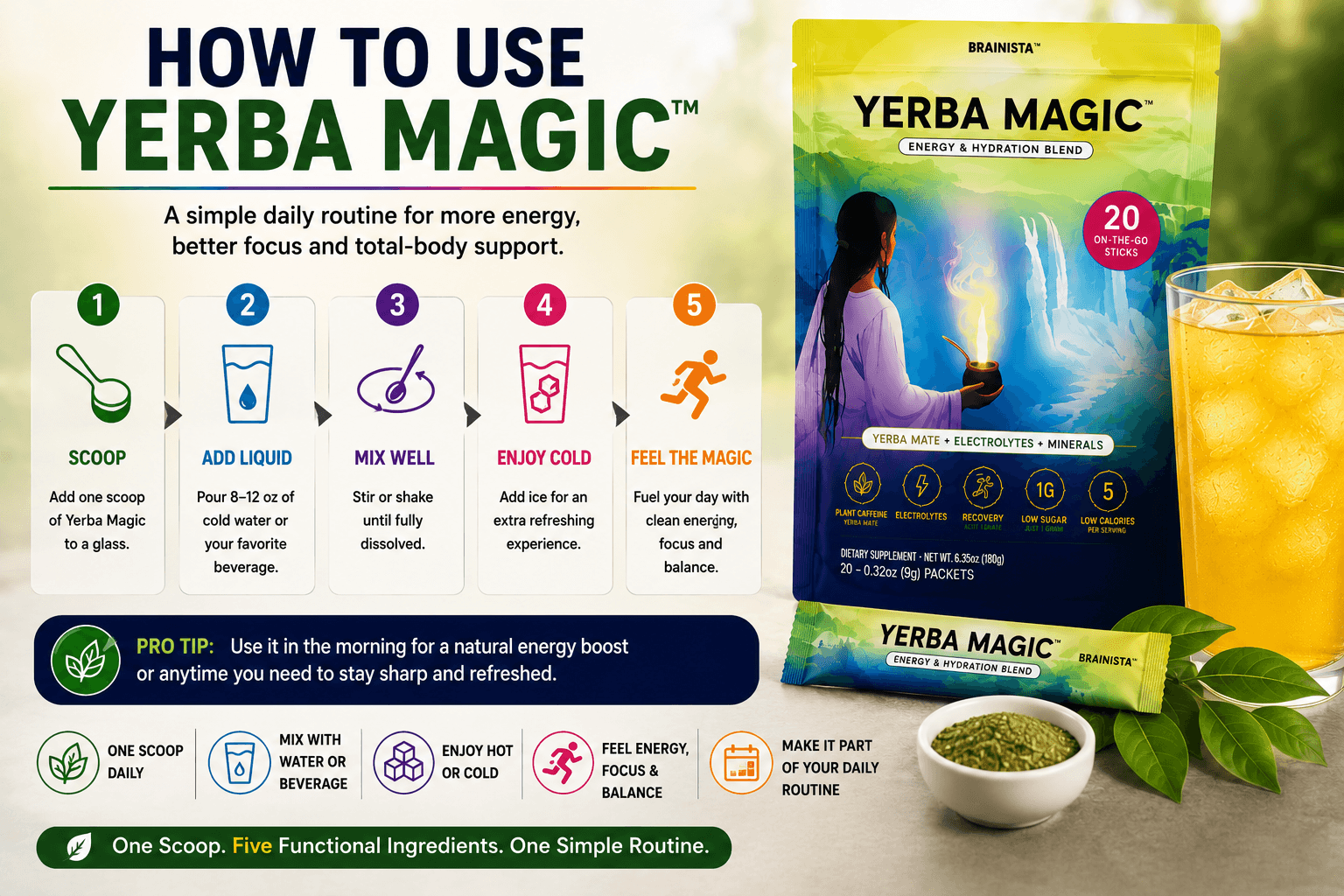
To prepare Yerba Magic, add one scoop to water and mix it thoroughly with a frother, whisk, or shaker. The brand’s standard directions emphasize water and ice, making it a convenient cold alternative to brewed coffee.
For better mixability:
- Add a small amount of water first.
- Mix in one scoop to create a concentrate.
- Add the remaining water.
- Froth, whisk, or shake thoroughly.
- Add ice once the powder is mostly blended.
- Stir again if any ingredients settle.
Using more water can reduce sweetness and create a lighter flavor.
Best time to drink it
Morning or early afternoon is the most practical timing for most users because a serving contains 100 mg of caffeine. Late use could interfere with sleep, particularly for people who process caffeine slowly.
Can you drink it on an empty stomach?
The company does not require it to be taken with food, but caffeine, inulin, probiotics, allulose, and stevia can cause discomfort for some people. A cautious first-time user may prefer drinking it after breakfast or with a light meal.
Can you use less than one scoop?
Using less than a scoop may help a caffeine-sensitive person assess tolerance, but it also lowers every other ingredient amount. Anyone needing precise control may prefer a product with individually packaged lower-dose servings.
Side Effects and Safety Considerations
The main possible side effects are caffeine-related stimulation and digestive discomfort from the fiber, probiotics, allulose, or stevia. Natural ingredients can still cause unwanted effects, and a 100 mg caffeine serving should not be treated like ordinary flavored water.
Possible caffeine effects include:
- Jitters
- Anxiety
- Increased heart rate
- Heart palpitations
- Headache
- Nausea
- Upset stomach
- Difficulty sleeping
For most adults, the FDA cites 400 mg per day as an amount not generally associated with negative effects, but sensitivity varies widely. Medical conditions, medication, pregnancy, body size, and personal caffeine metabolism can all affect tolerance.
Yerba Magic should be counted alongside coffee, tea, soda, chocolate, pre-workout supplements, energy drinks, and caffeine-containing medications.
Possible digestive effects
Inulin and probiotics may cause:
- Gas
- Bloating
- Stomach rumbling
- Cramping
- Changes in bowel movements
The NIH notes that probiotics can cause gas in healthy users and may not be appropriate for everyone, particularly people who are seriously ill or immunocompromised.
Who should seek professional advice first?
Speak with a qualified healthcare professional before regular use if you are pregnant, trying to become pregnant, breastfeeding, taking relevant medication, managing a heart or blood-pressure condition, highly caffeine-sensitive, immunocompromised, or living with a significant digestive disorder.
Medical experts advise against energy drinks for children and teenagers because of caffeine and related concerns.
Yerba Magic Pros and Cons
What Do Customer Reviews Say?
The brand-hosted review section is strongly positive about flavor, convenience, energy, and coffee replacement, but it should not be treated as independent proof. As of August 1, 2026, the main product page displayed 2,067 reviews, with 80% shown as five-star ratings.
Recurring positive themes include:
- Enjoyable fruit flavors
- Quick preparation
- Use as a coffee or energy-drink replacement
- Noticeable energy
- Positive comments about digestive comfort
Recurring concerns across buyer discussions and the formula itself include:
- Sweetness or stevia aftertaste
- Digestive sensitivity to inulin
- A moderate rather than intense caffeine effect
- Inconsistent appetite or weight-related results
- Higher cost than home-brewed coffee
Yerba Magic vs. Coffee, Matcha, and Energy Drinks
Yerba Magic is most competitive when convenience and an all-in-one formula matter more than the lowest cost. Coffee and tea remain simpler and usually cheaper, while canned energy drinks require no mixing.
| Option | Main advantage | Main drawback | Best for |
| Yerba Magic | Caffeine, L-theanine, lion’s mane, and gut ingredients in one powder | Higher price and more ingredients to tolerate | Convenience-focused buyers |
| Home-brewed coffee | Affordable and familiar | Caffeine varies and may feel sharp for some users | Traditional coffee drinkers |
| Traditional yerba mate | Simpler, authentic mate experience | Requires preparation and has an earthy taste | Mate enthusiasts |
| Matcha | Tea ritual with naturally occurring caffeine | Taste and preparation do not suit everyone | Green-tea drinkers |
| Canned energy drinks | Ready to drink | Sugar, caffeine, and formulas vary widely | Maximum portability |
When Yerba Magic offers better value
The product may make sense when it replaces:
- A $4–$7 café drink
- A canned energy beverage
- Separate caffeine and L-theanine products
- Several powders used mainly for convenience
- A sugary afternoon habit
When coffee or tea is a better buy
Choose a simpler alternative when you only want inexpensive caffeine, prefer unsweetened drinks, or do not care about lion’s mane and digestive-support ingredients.
Price, Subscription, and Value
One 30-serving pouch of Yerba Magic costs $39.99 as a one-time purchase, while the Subscribe & Save price is currently $29.99. That equals approximately $1.33 per serving for the one-time purchase and $1.00 per serving with the subscription.
The product selector also offers a two-pouch package with the second pouch at 50% off and a three-pouch package that allows buyers to purchase two and receive one free. However, the page currently contains inconsistent serving information and may display “60 servings” beside some single-pouch options. Buyers should verify the number of pouches, total servings, final charge, and renewal terms in the cart before paying.
The subscription provides an advertised 25% discount, is billed every 30 days, and continues until canceled. The page currently advertises free shipping on U.S. orders, but buyers should confirm the final shipping charge at checkout.
Should you subscribe?
A lower price is useful only when you know you like the product and will finish it. For a first order:
- Choose the $39.99 one-time purchase.
- Confirm automatic refills are not selected.
- Test the flavor and caffeine response.
- Pay attention to digestive tolerance.
- Consider the $29.99 subscription only when regular monthly use makes sense.
For me, the value depends on replacement. If Yerba Magic replaces a more expensive afternoon drink while providing the steady energy I noticed, the price is easier to justify. If it becomes an additional expense alongside coffee, the value drops quickly.
Is Yerba Magic Legit or a Scam?
Yerba Magic appears to be a legitimate product sold through an operating official store, but buyers should review the marketing and purchase terms carefully. The site publishes ingredient amounts, nutrition information, customer-support details, purchase options, and formal policy pages.
A legitimate product can still use claims that are stronger than the evidence. The sales page describes no-crash energy, digestive support, metabolism support, appetite-related benefits, and broader wellness changes. These should be understood as brand claims, not guaranteed outcomes.
Shipping details
The main product page advertises free U.S. shipping and displays an estimated delivery date. A separate promotional page says orders ship within 24 hours and typically arrive in three to five business days.
Since checkout conditions can change, confirm the final shipping charge and delivery estimate before payment.
The return-policy conflict
The product and promotional pages advertise 30-day easy returns or a money-back guarantee. However, the formal refund policy says only unopened products are returnable within 30 days, and clearly states that opened consumable items cannot be returned.
That conflict matters because a buyer cannot judge the flavor or effects without opening the pouch.
Before ordering:
- Save the offer shown at checkout
- Confirm whether an opened first pouch is refundable
- Keep the package and order confirmation
- Contact support before returning anything
- Check whether return shipping is your responsibility
Who Should Buy Yerba Magic?
Yerba Magic is best for adults who want moderate, steady caffeinated energy in a fruit-flavored powder and value its combined formula. It is most practical when it replaces a less convenient or more expensive habit.
It may be a good fit if you:
- Want a predictable caffeine amount
- Prefer cold fruit flavors over hot coffee
- Value caffeine paired with L-theanine
- Want fast, no-brew preparation
- Are interested in lion’s mane and digestive ingredients
- Regularly spend more than $1.33 on an energy drink
- Need a portable option for work or travel
It may not suit you if you:
- Are caffeine-sensitive
- Prefer plain, unsweetened beverages
- Dislike stevia or powdered flavors
- Do not tolerate inulin or probiotics
- Only want low-cost caffeine
- Need a specialized probiotic or mushroom supplement
- Expect guaranteed weight loss
Frequently Asked Questions About Yerba Magic
Buyers commonly ask whether Yerba Magic really works, how much caffeine it contains, whether it causes jitters, and if it can support weight loss. The answers below separate my personal testing experience from the product’s disclosed formula and broader marketing claims. They also address daily use, taste, safety, legitimacy, and how long one pouch lasts.
Does Yerba Magic really work?
Yerba Magic worked for me as a steady-energy drink during a short-term, multiweek test. The 100 mg caffeine dose should support alertness for many caffeine-responsive adults. Focus, digestive, appetite, and weight-related effects are more individual and should not be considered guaranteed.
How much caffeine is in one serving?
One scoop contains 100 mg of caffeine from yerba mate. That can be comparable to some coffee servings, although coffee varies widely by size and brewing method. Count it alongside every other caffeine source consumed during the day.
Did Yerba Magic give me steady energy?
Yes. Steady energy was the clearest effect I personally noticed. It did not feel like an extreme burst. Instead, the energy felt more even while I worked. That is a personal experience, not a promise that every user will respond in the same way.
Does Yerba Magic cause jitters or a crash?
It can. The drink contains 100 mg of caffeine, and sensitivity varies. L-theanine may help the stimulation feel more balanced for some users, but it does not guarantee a jitter-free or crash-free experience.
Can you drink Yerba Magic every day?
The brand markets it for daily use, but daily suitability depends on caffeine tolerance, medication, health conditions, sleep, and digestive response. Reduce or stop use if it repeatedly disrupts sleep, causes anxiety, affects heart rate, or upsets your stomach.
Does Yerba Magic help with weight loss?
Yerba Magic is not a proven weight-loss treatment. It may support a lower-calorie routine when it replaces a sweet coffee, soda, snack, or energy drink. It should not be expected to burn fat directly or provide prescription-like appetite control.
What does Yerba Magic taste like?
The powder comes in Peach Mango, Strawberry Matcha, and Piña Colada. It is designed to be fruity and sweet rather than taste like plain traditional yerba mate. Buyers who dislike stevia or sweet powdered drinks may not enjoy it.
Can you take it on an empty stomach?
The company does not require food, but caffeine, inulin, probiotics, allulose, and stevia may be uncomfortable on an empty stomach for some people. A first-time user with sensitive digestion may prefer taking it after a meal.
Is Yerba Magic FDA approved?
Yerba Magic should not be presented as an FDA-approved treatment for fatigue, digestive conditions, weight loss, or another medical issue. The company’s site includes a disclaimer stating that its claims have not been evaluated by the FDA.
Is Yerba Magic a scam?
Yerba Magic appears to be a real product from an operating store. The main buyer concerns are strong wellness marketing, automatic subscription terms, and inconsistent return language between promotional pages and the formal refund policy.
How long does one pouch last?
The standard pouch contains 30 servings, so it lasts about 30 days when used at one scoop per day. Using less than a scoop extends the pouch but reduces the amount of caffeine and every other ingredient.
Final Yerba Magic Review and Recommendation
After testing Yerba Magic for a few weeks, I consider it a useful coffee alternative for steady energy but not a proven all-in-one solution for focus, digestion, appetite, and weight loss.
The product succeeded at the main job I cared about. The energy felt steady and usable during work rather than like a sudden stimulant rush. The 100 mg caffeine and 100 mg L-theanine combination is also more thoughtfully designed than a powder that relies on caffeine alone.
The supporting formula adds convenience, but it should not be oversold. Lion’s mane quality details are limited, the probiotic information is not complete enough to assess potency through expiration, and the broader wellness outcomes remain personal.
The main practical concerns are:
- Higher cost than coffee or tea
- Possible digestive sensitivity
- Sweetener preference
- Subscription renewal terms
- Conflicting promotional and formal return language
My recommendation
Yerba Magic is worth trying when you want a fruit-flavored, moderate-caffeine drink and the convenience of several supporting ingredients in one scoop.
Start with one pouch as a one-time order. Confirm the quantity, price, shipping, and return conditions at checkout. Consider automatic refills only after you know the taste, caffeine level, and formula work for your routine.
Buy it for the steady-energy experience and convenient format, not because you expect every marketing promise to become a personal result.
Yerba Magic combines 100 mg of caffeine from yerba mate with 100 mg of L-theanine, 1,000 mg of lion’s mane, and prebiotic and probiotic ingredients. During my test, it delivered steady, usable energy with an easy-to-mix fruit flavor. Its main drawbacks are the premium price and possible digestive discomfort for sensitive users.
- Provided steady energy during my test
- Clearly lists 100 mg of caffeine per serving
- Pairs caffeine with 100 mg of L-theanine
- Includes 1,000 mg of lion’s mane
- Contains prebiotic and probiotic ingredients
- Costs more than basic coffee or tea
- Sweetened flavor may not suit everyone